
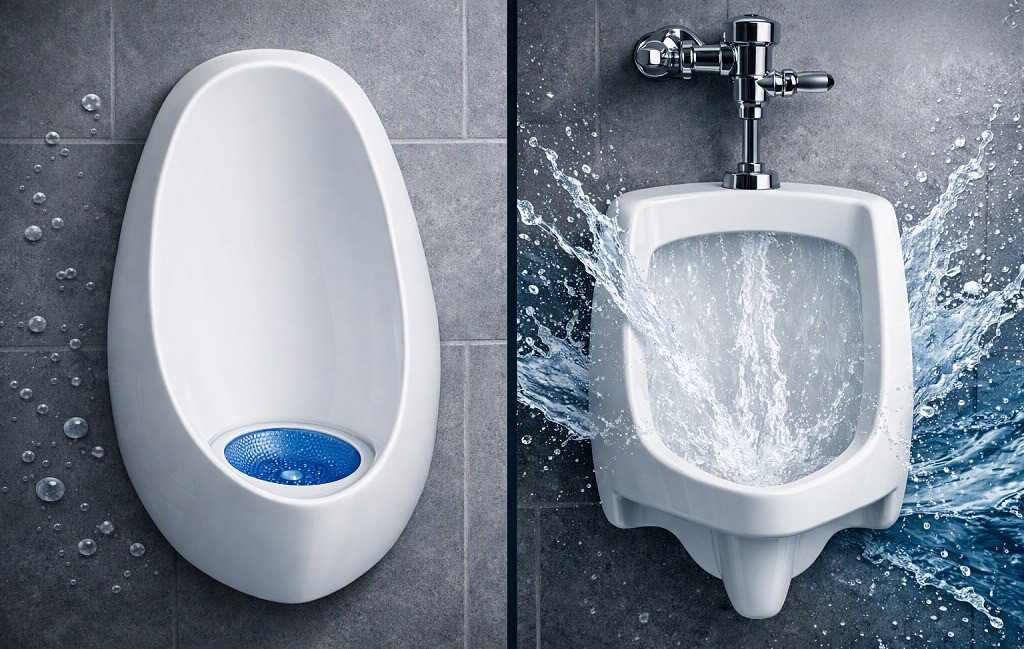
When designing or renovating a restroom, choosing the right type of urinal can significantly affect water consumption, maintenance costs, hygiene, and long-term operating expenses. Two of the most common options are waterless urinals and traditional flush urinals. While both serve the same purpose, they work very differently and are suited to different environments.
Waterless urinals have become increasingly popular in commercial buildings because they eliminate the need for flushing water. On the other hand, flush urinals remain the standard choice in many homes, schools, restaurants, and public facilities due to their familiar operation and relatively simple maintenance.
So, which one is the better choice?
The answer depends on several factors, including your budget, water costs, maintenance capabilities, local plumbing regulations, and the expected number of users.
In this guide, we’ll compare waterless and flush urinals in detail, covering everything from installation costs and maintenance requirements to hygiene, environmental impact, and long-term value. By the end, you’ll know which option best fits your specific needs.
Quick Comparison: Waterless Urinal vs. Flush Urinal
Feature | Waterless Urinal | Flush Urinal |
Water Usage | No water required | Uses water every flush |
Operating Cost | Very low water cost | Ongoing water bills |
Installation | Moderate | Moderate |
Plumbing Requirement | Drain only | Drain + water supply |
Maintenance | Cartridge replacement | Flush valve servicing |
Odor Control | Depends on proper maintenance | Good when functioning correctly |
Hygiene | Excellent with proper cleaning | Excellent with regular flushing |
Environmental Impact | Very high water savings | Higher water consumption |
Initial Cost | Usually higher | Wide price range |
Best For | Commercial buildings, high-traffic facilities | Homes, schools, public restrooms |
What Is a Waterless Urinal?
A waterless urinal is a plumbing fixture designed to collect urine without using water for flushing. Instead of relying on water to carry waste into the drainage system, it uses gravity and a specially designed drain cartridge or sealing liquid that allows urine to pass while preventing sewer gases and odors from coming back into the restroom.
Most modern waterless urinals are made from durable porcelain, vitreous china, stainless steel, or composite materials. Although they resemble conventional urinals, they operate differently beneath the drain opening.
How It Works
The process is straightforward:
- Urine flows directly into the drain.
- It passes through a replaceable cartridge or built-in trap.
- The cartridge creates a seal that blocks odors.
- Waste enters the drainage system without requiring any flushing water.
Because there is no water supply line or flush valve, these fixtures can save thousands of gallons of water each year in busy facilities.
What Is a Flush Urinal?
A flush urinal is the traditional type found in most public restrooms. It uses water to rinse the bowl and carry urine through the drain after each use.
Flush urinals typically operate using:
- Manual flush valves
- Automatic sensor flush valves
- Timed flush systems
- Tank-fed systems (less common)
Every use triggers a flush that washes the bowl clean while moving waste into the sewer system.
Depending on the model and local regulations, a modern high-efficiency flush urinal may use as little as 0.125 gallons (0.47 liters) per flush, while older models can use 1 to 3 gallons (3.8–11.4 liters) per flush.
How They Differ
Although they look similar, the biggest difference lies in how they remove waste.
A waterless urinal depends entirely on gravity and a sealed drain system, eliminating water use altogether. A flush urinal relies on fresh water after every use to clean the bowl and transport waste.
This single design difference influences nearly every aspect of ownership, including:
- Utility bills
- Maintenance routines
- Plumbing requirements
- Environmental impact
- Odor management
- Long-term operating costs
Understanding these differences helps determine which option is more practical for your building.
Water Consumption Comparison
One of the primary reasons businesses switch to waterless urinals is the significant reduction in water usage.
Waterless Urinals
Waterless urinals require zero gallons of water per use. Since there is no flushing mechanism, every visit saves water that would otherwise be used to rinse the fixture.
In a busy office, school, airport, or stadium, this can translate into tens of thousands of gallons of water saved annually per urinal, depending on daily usage and the type of flush urinal being replaced.
Flush Urinals
Even modern high-efficiency flush urinals consume water with every use. Typical consumption ranges from:
- 0.125 gallons (0.47 L) per flush – High-efficiency models
- 0.5 gallons (1.9 L) per flush – Common commercial models
- 1.0 gallon (3.8 L) per flush – Older efficient models
- Up to 3 gallons (11.4 L) per flush – Older installations
Although newer fixtures have greatly improved water efficiency, they still contribute to ongoing water costs over time.
Which Saves More Money?
Water savings can lead to substantial financial savings, especially in facilities with heavy daily traffic.
For example, if a restroom experiences 100 uses per day and each flush uses 0.5 gallons, the annual water usage would exceed 18,000 gallons for a single urinal. In regions with high water and sewer rates, eliminating this usage can noticeably reduce utility bills.
However, it’s important to factor in the recurring cost of replacement cartridges or sealants used by many waterless urinal systems. These maintenance expenses may offset some of the savings, depending on product type, usage, and local utility rates.
Installation Cost Comparison
The total cost of installing a urinal depends on the fixture itself, plumbing requirements, labor rates, and whether you’re installing it in a new construction project or replacing an existing unit.
Waterless Urinal Installation
Waterless urinals eliminate the need for a water supply line and flush valve. This can simplify installation in new buildings and reduce the number of plumbing components required.
Typical installation involves:
- Mounting the urinal
- Connecting the drain line
- Installing the drain cartridge or integrated trap
- Testing for leaks and proper drainage
Advantages
- No flush valve to install
- No water supply piping
- Fewer mechanical parts
- Lower risk of water leaks
Potential Drawbacks
If you’re converting from a traditional flush urinal, you may need to cap or reroute the existing water supply line, which can increase labor costs.
Flush Urinal Installation
A flush urinal requires both a drain connection and a water supply. Depending on the model, it may also require:
- Manual flush valve
- Sensor-operated flush valve
- Concealed flush system
- Water pressure adjustments
Although installation is straightforward for most plumbers, there are more components to install and maintain.
Which Costs Less to Install?
For new commercial construction, waterless urinals may reduce plumbing costs because no water supply is required.
For replacing an existing flush urinal, installation costs are often similar, as the existing plumbing can usually be reused.
Overall, installation costs vary by location and project complexity, so it’s best to request quotes from licensed plumbers.
Maintenance Requirements
Maintenance is one of the biggest differences between these two types of urinals.
Maintaining a Waterless Urinal
Contrary to a common misconception, waterless urinals are not maintenance-free.
To perform properly, they require:
- Daily surface cleaning
- Periodic drain cleaning
- Replacement of cartridges or sealants (depending on the design)
- Inspection for mineral buildup
Manufacturers typically recommend replacing cartridges after a certain number of uses or according to a scheduled maintenance plan. Following these recommendations helps prevent odors and maintain proper drainage.
Advantages
- No flush valve repairs
- No leaking valves
- No clogged flush mechanisms
- Lower water-related maintenance
Disadvantages
- Cartridge replacement is an ongoing expense.
- Improper cleaning can damage the cartridge or reduce its effectiveness.
- Maintenance staff may need training on the manufacturer’s cleaning guidelines.
Maintaining a Flush Urinal
Traditional urinals also require routine maintenance.
Common tasks include:
- Cleaning the bowl
- Inspecting flush valves
- Repairing leaks
- Removing mineral deposits
- Replacing worn seals
- Fixing automatic sensor systems (if equipped)
Hard water can gradually clog flush valves or leave mineral deposits, especially in areas with untreated water.
Maintenance Comparison
Maintenance Task | Waterless | Flush |
Daily Cleaning | ✔ | ✔ |
Cartridge Replacement | ✔ | ✖ |
Flush Valve Repairs | ✖ | ✔ |
Water Leak Repairs | ✖ | ✔ |
Mineral Scale Removal | Moderate | Moderate to High |
Sensor Maintenance | ✖ | Sometimes |
Hygiene Comparison
Many people assume a waterless urinal is less sanitary because it doesn’t flush. In reality, hygiene depends much more on proper maintenance than on whether the fixture uses water.
Waterless Urinals
When cleaned according to the manufacturer’s recommendations:
- Urine drains immediately.
- The sealed cartridge helps block sewer gases.
- There is no standing flush water that can harbor mineral deposits.
- Splashing may be reduced with certain bowl designs.
However, neglecting routine maintenance can lead to unpleasant odors or buildup.
Flush Urinals
Flush urinals rinse the bowl after every use, helping remove fresh urine and reducing visible residue.
If the flush system isn’t working correctly, however, urine can remain in the bowl, leading to stains, odors, and bacterial growth.
Which Is More Hygienic?
Both systems can provide excellent hygiene when:
- Cleaned regularly
- Maintained properly
- Installed correctly
Neither design is automatically more sanitary than the other.
Odor Control
Odor control is often the deciding factor for facility managers.
Waterless Urinals
Modern waterless urinals prevent odors by using:
- Liquid sealants
- Mechanical trap cartridges
- Membrane systems
When these components are functioning correctly, sewer gases remain blocked.
Odor problems usually occur because:
- The cartridge has exceeded its service life.
- Incorrect cleaning chemicals were used.
- Maintenance has been neglected.
- The drain has become partially blocked.
Flush Urinals
Traditional urinals rely on water flushing and the plumbing trap to control odors.
Common odor causes include:
- Infrequent flushing
- Dry drain traps
- Clogged drains
- Urine scale buildup
- Faulty plumbing vents
Proper maintenance is essential regardless of the urinal type.
Durability and Lifespan
Both waterless and flush urinals are typically made from durable materials such as vitreous china, porcelain, or stainless steel.
With proper installation and maintenance:
- The ceramic fixture itself can last 20 years or more.
- Flush valves and sensors may require replacement over time.
- Waterless cartridges are consumable components that need periodic replacement, while the urinal body remains in service.
In general, the fixture’s lifespan is influenced more by maintenance and usage than by whether it uses water.
Environmental Impact
One of the strongest arguments for waterless urinals is sustainability.
Waterless Urinals
Benefits include:
- Conserving potable water.
- Reducing wastewater generation.
- Lowering the energy associated with water treatment and pumping.
- Supporting green building initiatives and water-efficiency goals.
These advantages are especially meaningful in regions facing water scarcity.
Flush Urinals
High-efficiency flush urinals use significantly less water than older models and can still contribute to water conservation efforts. However, they continue to consume water throughout their service life.
Pros and Cons
Waterless Urinals
Pros
- Eliminate water use during operation.
- Lower long-term water bills.
- Fewer plumbing components.
- No flush valve maintenance.
- Can contribute to sustainability initiatives.
Cons
- Require cartridge or seal maintenance.
- Cleaning procedures must follow manufacturer guidance.
- Upfront costs may be higher for some models.
- Performance depends on consistent maintenance.
Flush Urinals
Pros
- Familiar operation for most users.
- Wide range of models and prices.
- Easy access to replacement parts.
- No cartridge replacement.
- Suitable for many residential and commercial applications.
Cons
- Ongoing water consumption.
- Higher utility costs over time.
- More mechanical components to maintain.
- Potential for leaks and flush valve failures.
Common Myths About Waterless Urinals
Myth 1: They Always Smell Bad
Reality: Properly maintained waterless urinals should not produce persistent odors. Most odor issues result from overdue cartridge replacement or incorrect cleaning practices.
Myth 2: They Never Need Maintenance
Reality: While they don’t require flush valve maintenance, they still need regular cleaning and periodic cartridge or seal servicing.
Myth 3: They Can’t Handle High Traffic
Reality: Many waterless urinals are designed specifically for busy environments such as airports, schools, office buildings, and stadiums, provided maintenance schedules are followed.
Best Applications
Both waterless and flush urinals have strengths that make them suitable for different environments. Choosing the right option depends on user volume, maintenance capabilities, local regulations, and operating costs.
Homes
Urinals are becoming more common in residential bathrooms, especially in larger homes or those with dedicated men’s bathrooms.
Waterless Urinal
Best if:
- Water conservation is a priority.
- You don’t mind following the manufacturer’s maintenance schedule.
- You want to reduce water usage over time.
Flush Urinal
Best if:
- You prefer a familiar, low-learning-curve fixture.
- You want to avoid cartridge replacements.
- Water savings are less of a concern.
Recommended choice for most homeowners: A modern, high-efficiency flush urinal is often the simpler option, while a waterless model may appeal to environmentally conscious homeowners willing to maintain it properly.
Offices
Office buildings often have predictable daily usage and maintenance staff.
Recommended choice: Waterless urinals can significantly reduce water consumption and operating costs in facilities with consistent maintenance routines.
Schools and Universities
Educational institutions experience high restroom traffic throughout the day.
Recommended choice: Either option can perform well. Waterless urinals may reduce water use, but administrators should ensure maintenance staff are trained to service cartridges or seals according to the manufacturer’s instructions.
Restaurants
Restaurants need clean, odor-free restrooms with minimal disruption.
Recommended choice: The decision depends on maintenance capacity. A well-maintained waterless urinal can reduce utility costs, while a high-efficiency flush urinal offers a familiar user experience.
Stadiums, Airports, and Shopping Malls
These facilities experience thousands of users every day.
Water savings can be substantial with waterless urinals. However, the maintenance program must be robust enough to handle frequent inspections and timely cartridge replacement where applicable.
Which Offers Better Long-Term Value?
The answer depends on what you value most.
Choose a Waterless Urinal if You Want:
- Maximum water conservation.
- Lower water and sewer costs over time.
- Fewer water-supply components.
- Support for sustainability goals.
- A solution for high-traffic commercial facilities with established maintenance programs.
Choose a Flush Urinal if You Want:
- Familiar operation.
- Simpler maintenance without cartridges.
- Broad availability of replacement parts.
- Compatibility with existing plumbing systems.
- A practical solution for many homes and commercial spaces.
Buying Guide: What to Consider Before Choosing
Before purchasing either type of urinal, consider the following:
1. Water Costs
If water and sewer rates are high in your area, reducing water use may provide meaningful long-term savings.
2. Maintenance Resources
Waterless urinals require adherence to manufacturer-recommended maintenance. Ensure your staff or service provider can support those requirements.
3. Local Plumbing Codes
Some jurisdictions have specific plumbing regulations regarding waterless fixtures. Always verify local code requirements before installation.
4. User Volume
High-traffic facilities may benefit more from water savings, while low-traffic settings may place greater emphasis on simplicity and familiarity.
5. Total Cost of Ownership
Look beyond the purchase price. Consider:
- Installation costs
- Water and sewer charges
- Maintenance labor
- Replacement parts (such as cartridges, if applicable)
- Expected lifespan
Frequently Asked Questions
1. Do waterless urinals really save water?
Yes. Because they do not use water for flushing, they can eliminate the water used per flush, potentially saving thousands of gallons annually in high-use facilities.
2. Do waterless urinals smell?
They should not if they are cleaned correctly and maintained according to the manufacturer’s recommendations. Most odor problems result from neglected maintenance or overdue cartridge replacement.
3. Are waterless urinals sanitary?
Yes. When properly maintained, they can provide a hygienic restroom solution comparable to traditional flush urinals.
4. How often should a waterless urinal cartridge be replaced?
Replacement intervals vary by manufacturer and usage. Follow the specific maintenance schedule provided with the product.
5. Are flush urinals easier to maintain?
They don’t require cartridges, but they do require maintenance of flush valves, sensors (if installed), and water supply components.
6. Which type is more environmentally friendly?
Waterless urinals generally have a lower operational water footprint because they eliminate flushing water.
7. Can waterless urinals be installed in existing buildings?
Often, yes. However, installation requirements depend on the existing plumbing configuration and local building codes.
8. Which type lasts longer?
The ceramic fixture of either type can last for decades with proper care. Lifespan is influenced more by maintenance than by the flushing method.
9. Are waterless urinals suitable for homes?
Yes, although they are more commonly used in commercial settings. Homeowners should be prepared to follow the recommended maintenance procedures.
10. Which is more cost-effective?
There is no universal answer. Waterless urinals can reduce water costs, while flush urinals may have lower maintenance complexity. The best choice depends on water rates, maintenance costs, and usage patterns.
Final Verdict
Both waterless and flush urinals are capable of providing reliable, hygienic performance when installed and maintained correctly.
If your priority is reducing water consumption and supporting sustainability initiatives, a waterless urinal can be an excellent option—particularly in commercial buildings with established maintenance programs.
If you prefer a familiar system with straightforward maintenance and broad compatibility, a modern high-efficiency flush urinal remains a practical and dependable choice.
Rather than asking which option is universally better, ask which one best fits your building’s needs, maintenance capabilities, and long-term operating goals.