
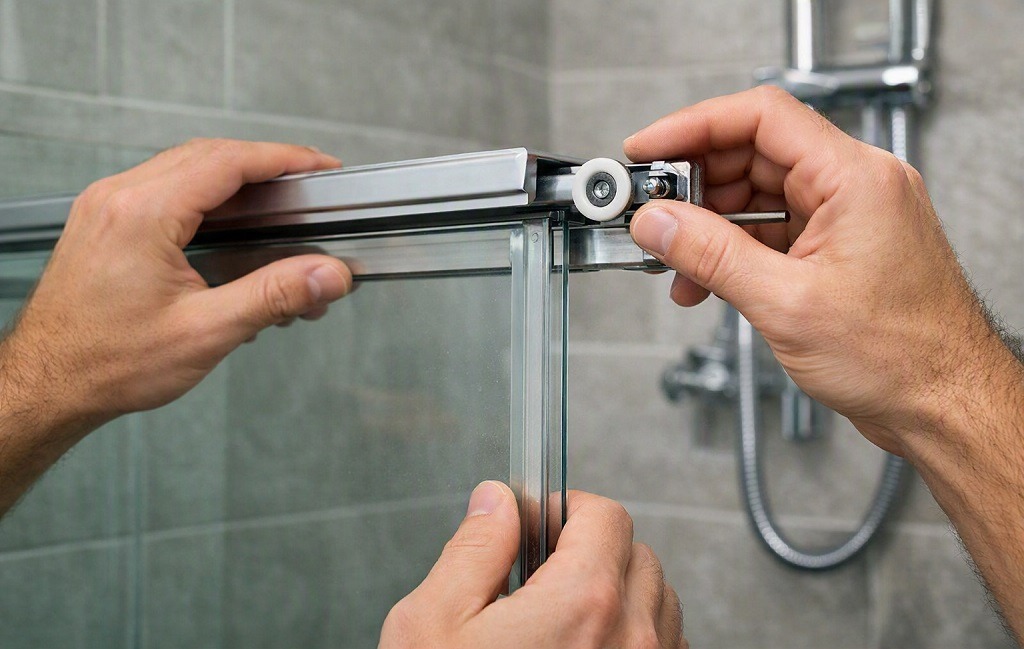
A sliding shower door that suddenly comes off its track can be frustrating, especially when you need to use the shower. Fortunately, in many cases, you can put a sliding shower door back on track yourself without calling a professional.
The process usually involves removing or lifting the door, checking the rollers, cleaning the track, and carefully repositioning the door. However, the exact method can vary depending on the type of shower door and its roller system.
In this guide, we’ll explain how to put a sliding shower door back on track safely and correctly. We’ll also cover why shower doors come off track, how to adjust them, and what to do if the door keeps coming off.
Why Does a Sliding Shower Door Come Off the Track?
Before putting the door back on, it’s helpful to understand why it came off in the first place. Otherwise, the problem may happen again.
Here are some of the most common causes:
1. Dirt and Soap Buildup
Shower tracks collect soap scum, hair, mineral deposits, and dirt over time. This buildup can prevent the rollers from moving smoothly.
When the rollers encounter resistance, the door can jump off the track.
2. Worn-Out Rollers
Most sliding shower doors use small rollers or wheels that allow the door to move along the track. These rollers can wear out, crack, rust, or become stiff.
Damaged rollers are one of the most common reasons a shower door repeatedly comes off its track.
3. Loose Roller Screws
The screws holding the rollers to the shower door can become loose over time. This can cause the door to sit unevenly and eventually jump off the track.
4. Misaligned Track
A bent, loose, or improperly installed track can prevent the rollers from staying in position.
5. Door Misalignment
If the shower door is not properly aligned, one side may sit higher or lower than the other. This puts additional pressure on the rollers and track.
6. Excessive Force
Sliding the door too aggressively or pulling on it at an angle can cause the rollers to leave the track.
What You’ll Need to Put a Shower Door Back on Track
Before starting the repair, gather the following items:
- Screwdriver
- Adjustable wrench, if required
- Soft cloth or microfiber towel
- Mild bathroom cleaner
- Old toothbrush or small cleaning brush
- Sponge
- Silicone-based lubricant
- Work gloves
- Replacement rollers, if the existing ones are damaged
You may not need every item. For a simple reinstallation, a screwdriver, cloth, and cleaner may be enough.
How to Put a Sliding Shower Door Back on Track
The following method works for many framed sliding shower doors. However, shower-door designs vary, so avoid forcing anything if your door uses a different roller system.
Step 1: Clear the Shower Area
Start by removing bottles, shampoo containers, bath mats, and other objects around the shower entrance.
You’ll need enough space to safely handle the glass door.
If possible, have another person help you. Glass shower doors can be heavy and awkward to handle, and dropping one can cause serious damage or injury.
Important: Never attempt to handle a heavy glass shower door alone if you’re not confident you can control its weight.
Step 2: Inspect the Door and Track
Before removing or repositioning the door, examine the track carefully.
Look for:
- Dirt
- Hair
- Soap scum
- Mineral deposits
- Rust
- Bent sections
- Loose screws
- Broken rollers
- Cracks or other damage
If the track is heavily contaminated, clean it before attempting to reinstall the door.
Step 3: Clean the Shower Door Track
A dirty track can prevent the rollers from moving correctly.
Apply a suitable bathroom cleaner and allow it to loosen the buildup. Then scrub the track using an old toothbrush, small brush, or sponge.
Pay particular attention to the areas where the rollers sit.
After cleaning, wipe the track thoroughly with a damp cloth and then dry it.
For stubborn mineral deposits, a suitable descaling solution may help. Always follow the cleaner manufacturer’s instructions and avoid mixing different cleaning chemicals.
Step 4: Determine How Your Door Is Mounted
Before lifting the door, look at the top and bottom edges.
Many framed sliding shower doors use rollers at either the top or bottom. Some designs use adjustable rollers that can be raised or lowered with screws.
Look closely at the roller assembly to understand how it connects to the track.
This is important because not every shower door is reinstalled in exactly the same way.
Step 5: Remove the Shower Door if Necessary
If the door has completely jumped off the track, you may need to remove it before putting it back correctly.
Depending on the design, the door may need to be lifted upward and tilted toward you.
For many bypass shower doors, the general process is:
- Hold the door firmly with both hands.
- Lift the door upward.
- Pull the lower portion slightly toward you.
- Carefully lower the door away from the track.
Don’t force the door.
If it doesn’t lift or tilt as expected, inspect the rollers and frame for clips, screws, or other retaining mechanisms.
If you’re dealing with a large or heavy glass door, have another person support it.
Step 6: Inspect the Rollers
With the door removed, inspect the rollers carefully.
Check whether they:
- Spin freely
- Are cracked
- Are worn down
- Have flat spots
- Are rusty
- Are loose
- Are missing pieces
A roller that doesn’t rotate smoothly can make the door difficult to operate and may cause it to come off the track again.
If the rollers are damaged, replacing them is usually a better solution than simply putting the door back on.
Step 7: Position the Rollers Over the Track
Now comes the most important part of putting the sliding shower door back on track.
Hold the door securely and position the rollers above or below the appropriate track, depending on your shower-door design.
For a typical top-roller system:
- Lift the door into position.
- Place the upper rollers onto the upper track.
- Keep the door tilted slightly toward you if necessary.
- Slowly lower the bottom of the door.
- Guide the lower portion into the bottom guide or track.
For a bottom-roller system, the process is reversed: position the bottom rollers into the lower track first and then guide the upper portion into its track or guide.
Never force the glass into position.
If the rollers don’t line up easily, stop and check whether one of them is stuck, damaged, or misaligned.
Step 8: Make Sure Both Rollers Are Properly Seated
Once the door is in place, carefully inspect both sides.
Each roller should sit securely on its track.
Move the door a few inches from side to side while supporting it. It should move smoothly without jumping, scraping, or wobbling excessively.
If one side is higher than the other, the rollers may need adjustment.
Step 9: Adjust the Shower Door Rollers
Many sliding shower doors have adjustable rollers.
An adjustment screw allows you to raise or lower one side of the door.
If the door is tilted:
- Locate the roller adjustment screw.
- Use the appropriate screwdriver.
- Make a small adjustment.
- Check the door’s position.
- Repeat until the door is level.
Make small adjustments rather than turning the screw excessively.
A properly adjusted shower door should sit evenly and move smoothly along the track.
Step 10: Lubricate the Track if Appropriate
Once the track is clean and dry, you may apply a small amount of silicone-based lubricant to the appropriate moving components if recommended for your door system.
Avoid using excessive lubricant.
Also, don’t assume every track should be heavily lubricated. Some shower-door systems are designed to operate with clean, dry tracks, and excessive lubricant can attract dirt.
If the manufacturer specifies a particular lubricant, use that product instead.
Step 11: Test the Shower Door
Slowly slide the door from one side to the other.
Pay attention to:
- Grinding sounds
- Scraping
- Sticking
- Uneven movement
- Excessive wobbling
- Rollers jumping
- Door movement away from the frame
Open and close the door several times.
If it moves smoothly and remains properly seated, the repair is likely successful.
What If the Sliding Shower Door Keeps Coming Off the Track?
If you’ve put the door back on track but it keeps coming off, simply reinstalling it may not solve the problem.
Check the following areas.
Check the Rollers
Worn or damaged rollers can prevent the door from staying in position.
If a roller is cracked, badly worn, or doesn’t spin properly, replace it.
Check the Track
Look for bends, dents, loose sections, or damaged areas.
A damaged track can cause the rollers to jump out.
Check the Door Alignment
The door should sit relatively level and parallel with the frame.
If it leans noticeably, adjust the rollers.
Check for Loose Hardware
Inspect the screws holding the roller assemblies and frame.
Loose hardware can change the position of the door.
Clean the Track Again
Even a relatively small amount of buildup can interfere with roller movement.
A clean track is essential for smooth operation.
How to Fix a Sliding Shower Door That Won’t Slide
Sometimes the door doesn’t come off the track but becomes difficult to open.
Start by cleaning the track thoroughly.
Then check the rollers.
A door that feels unusually heavy or jerky may have:
- Dirty rollers
- Worn rollers
- Misaligned rollers
- A damaged track
- Loose hardware
If cleaning and adjustment don’t solve the problem, replacing the rollers may be necessary.
How to Replace Shower Door Rollers
If your rollers are worn out, replacement is often straightforward.
First, identify the correct replacement roller by checking:
- Roller diameter
- Mounting hole size
- Screw type
- Roller shape
- Door model
- Track configuration
It’s a good idea to remove one existing roller and take it with you when purchasing a replacement.
When installing the new roller:
- Remove the old roller.
- Clean the mounting area.
- Install the new roller.
- Tighten the screw securely.
- Reinstall the shower door.
- Adjust the roller if necessary.
- Test the door.
Avoid overtightening screws because excessive force can damage components.
How to Prevent a Sliding Shower Door From Coming Off Track
Once you’ve fixed your door, a little maintenance can help prevent the problem from returning.
Clean the Track Regularly
Remove hair, soap residue, and mineral buildup before it becomes excessive.
Don’t Slam the Door
Close the door gently instead of pushing it aggressively.
Inspect the Rollers
Check the rollers periodically for signs of wear.
Keep the Track Clear
Don’t allow objects or debris to accumulate in the track.
Check Loose Screws
Occasionally inspect the roller hardware and frame for looseness.
Address Problems Early
If the door starts sticking, scraping, or wobbling, fix the issue before the rollers completely come off the track.
When Should You Replace the Shower Door Rollers?
Consider replacing the rollers when:
- The wheels are cracked.
- They don’t spin freely.
- The door repeatedly comes off the track.
- The door makes grinding noises.
- The rollers have visible flat spots.
- Adjusting the rollers doesn’t solve the problem.
- The door continues to wobble.
Replacing worn rollers can be much easier and less expensive than replacing the entire shower door.
When Should You Call a Professional?
Putting a shower door back on track is often a manageable DIY project, but there are situations where professional help is the safer choice.
Consider contacting a professional if:
- The glass is cracked or damaged.
- The door is extremely heavy.
- The frame is badly bent.
- The track is seriously damaged.
- You cannot determine how the roller system works.
- The door won’t stay on the track after adjustment.
- You are uncomfortable handling large glass panels.
A broken or improperly supported glass shower door can be dangerous, so don’t take unnecessary risks.
Frequently Asked Questions
Can I put a sliding shower door back on track myself?
Yes. Many sliding shower doors can be put back on track as a DIY repair. The process generally involves inspecting the rollers and track, positioning the rollers correctly, and adjusting the door.
However, large or heavy glass doors may require two people for safe handling.
Why does my sliding shower door keep coming off the track?
The most common causes include worn rollers, dirt buildup, loose hardware, improper adjustment, misalignment, and a damaged track.
If the problem happens repeatedly, inspect the rollers and track rather than simply reinstalling the door each time.
How do I know if my shower door rollers are bad?
Worn rollers may look cracked, flattened, rusty, or damaged. They may also stop spinning smoothly.
A shower door that sticks, wobbles, or repeatedly comes off the track can also indicate worn rollers.
Should I lubricate my shower door track?
Not necessarily. Some shower-door systems benefit from appropriate silicone-based lubrication, while others work best with a clean, dry track.
Check the manufacturer’s recommendations before applying lubricant.
Why is my sliding shower door difficult to open?
A dirty track, damaged rollers, misalignment, loose hardware, or a damaged track can make a shower door difficult to slide.
Start by cleaning the track and inspecting the rollers.
Can I replace shower door rollers without replacing the door?
Yes. In many cases, worn rollers can be replaced without replacing the entire shower door.
Make sure the replacement rollers match the original size and mounting configuration.
How often should I clean my shower door track?
For most bathrooms, cleaning the track every few weeks can help prevent heavy buildup. Homes with hard water may require more frequent cleaning.
Final Thoughts
Learning how to put a sliding shower door back on track can save you time and the cost of an unnecessary service call. In many cases, the solution is simply cleaning the track, reseating the rollers, and adjusting the door.
However, don’t stop at putting the door back in place if it keeps coming off. Inspect the rollers, track, alignment, and hardware to identify the underlying problem.
If the rollers are damaged, replace them. If the track is bent or the glass is damaged, professional repair may be the safest option.
With regular cleaning and occasional inspection, your sliding shower door should continue to open and close smoothly for years.