
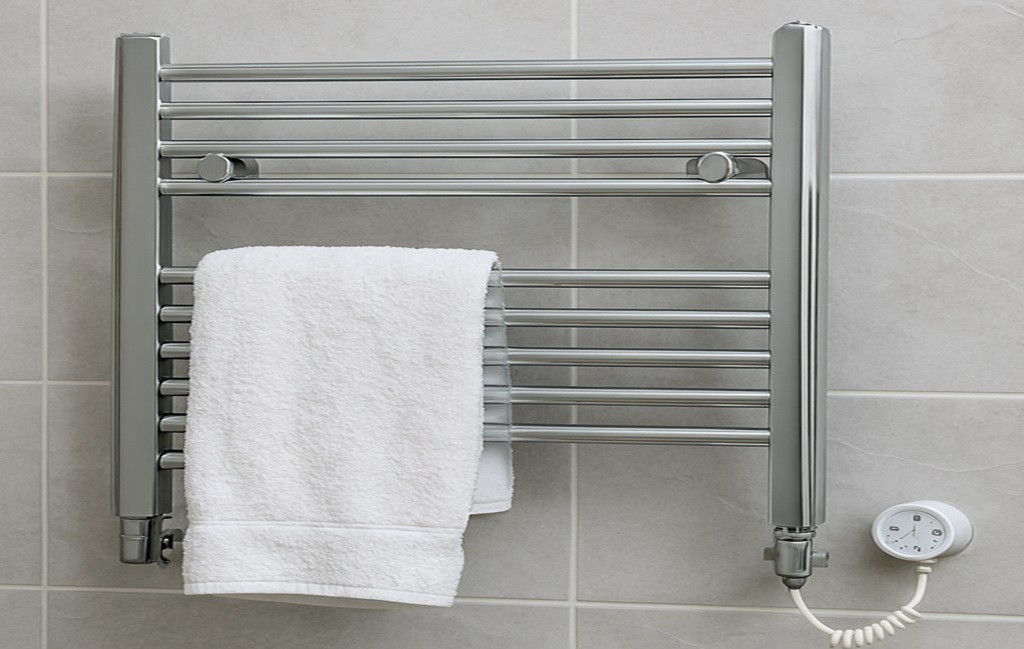
Heated towel rails have evolved from high-end hotel luxuries to essential fixtures in the modern home. They provide two critical functions: keeping your towels plush and warm and reducing the ambient humidity that leads to mold and mildew in bathrooms. However, because they sit at the intersection of your home’s plumbing and electrical systems, they can be prone to specific mechanical failures.
When a towel rail stops performing, the temptation is to call a professional immediately. But with a bit of technical knowledge, most homeowners can diagnose and repair these units themselves. This comprehensive guide will walk you through everything from basic anatomy to advanced troubleshooting and long-term maintenance.
Section 1: Understanding Your Heated Towel Rail
To fix a problem, you must first understand the machine. Heated towel rails are categorized by how they generate and distribute heat.
1.1 Types of Heated Towel Rails
There are three primary variants on the market today:
- Hydronic (Central Heating) Rails: These are essentially stylized radiators. They are plumbed directly into your home’s central heating system. Hot water from your boiler flows through the rails, heating the metal via conduction.
- Electric-Only Rails: These function independently of your plumbing. They contain either a “dry” heating wire or are filled with a heat-retentive fluid (like glycol) and an electric immersion element. These are popular for summer use when your central heating is turned off.
- Dual-Fuel Rails: The hybrid of the industry. These are connected to the central heating for winter use but also contain an electric element for summer use. They offer the most flexibility but have two sets of potential failure points.
1.2 How the Heating Mechanism Works
- Convection and Radiation: Most rails use a combination of both. The surface area of the bars radiates heat to the towels, while the air passing between the bars creates a convection current that helps dry the room.
- Thermal Mass: Fluid-filled rails (both hydronic and electric) have high thermal mass, meaning they take longer to heat up but stay warm much longer after the power is cut. Dry-wire electric rails heat up almost instantly but cool down just as fast.
1.3 Safety Protocols Before Troubleshooting
Before you touch your towel rail with a tool, follow these 2026 safety standards:
- Isolate Power: For electric models, don’t just turn off the switch; flip the breaker at the consumer unit.
- Pressure Check: For hydronic models, remember that the water inside can be over 60°C (140°F) and under significant pressure.
- Surface Protection: Place a heavy towel or drop cloth beneath the rail. Leaking radiator water is often treated with chemicals (inhibitors) and can permanently stain bathroom tiles or grout.
Section 2: Common Problems and Solutions
Troubleshooting is a process of elimination. We will start with the most common “dead” unit scenarios and move into more nuanced performance issues.
2.1 Towel Rail Not Heating (The “Total Failure” Scenario)
If the rail is stone cold, the energy loop has been broken.
For Electric Rails:
- The Cause: Often a blown fuse in the fused spur (the wall connection) or a tripped RCD in your fuse box. In some cases, the internal heating element has burned out due to age or a power surge.
- The Solution: First, check your main electrical panel. If the breaker is fine, replace the 3A or 5A fuse in the wall switch. If the rail still won’t heat, use a multimeter to check for continuity in the heating element. If there is no continuity, the element needs replacement.
For Hydronic Rails:
- The Cause: The most common cause is a closed valve. If you recently had work done on your home, a plumber may have closed the “lockshield” valve and forgotten to reopen it.
- The Solution: Check both valves at the bottom of the rail. The “Flow” valve (the one you usually turn) and the “Lockshield” (often under a plastic cap). Both should be turned fully counter-clockwise. If they are open and the rail is cold, your system might have a “balancing” issue, where the water prefers the path of least resistance through other radiators.
2.2 Uneven Heating (Cold Spots and Airlocks)
This is the “Goldilocks” problem—the rail is warm, but not warm enough, or only warm at the bottom.
The Symptom: You touch the bottom rung, and it’s hot, but the top rungs are room temperature. The Cause: Air. Because air is lighter than water, it rises to the highest point in your heating loop—which is often the top of your towel rail. This air pocket prevents hot water from reaching the upper bars.
The Solution: How to Bleed Your Rail (Step-by-Step)
- Turn off your central heating and let the rail cool slightly (to avoid being scalded).
- Locate the bleed valve, usually a small hexagonal nut inside a round housing at the very top of the rail.
- Insert a radiator key and turn it slowly (half a turn) counter-clockwise.
- You will hear a hissing sound. This is the trapped air escaping.
- Keep a rag held under the valve. When the hissing stops and a steady stream of water appears, tighten the valve immediately.
- Check your boiler pressure afterward; you may need to top it up via the filling loop.
2.3 Leaks and Drips
A leak in a bathroom can go unnoticed for a long time due to the naturally wet environment, leading to sub-floor rot.
The Cause: Most leaks occur at the “union”—the point where the pipework meets the valve. This is usually due to the expansion and contraction of the metal bars causing the nuts to loosen over time. The Solution: * Tightening: Use an adjustable spanner to give the compression nut a quarter-turn. Do not overtighten, as this can crush the internal copper “olive” and make the leak worse.
- Sealing: If tightening fails, you may need to drain the rail, undo the nut, and apply PTFE tape (plumber’s tape) to the threads. This creates a watertight seal that can withstand the vibrations of the heating system.
2.4 Clicking, Banging, or Gurgling
The Cause: * Gurgling: This is a clear sign of air bubbles moving through the water. It’s the precursor to the cold-spot problem.
- Clicking: This is “thermal expansion.” As the rail heats up, the metal expands. If the wall brackets are too tight or the pipes are rubbing against the floorboards, you will hear a rhythmic clicking. The Solution: * Bleed the rail to stop gurgling.
- For clicking, slightly loosen the screws on the wall brackets just enough to allow for microscopic movement. You can also apply a small amount of silicone lubricant to the bracket inserts.
2.5 Rail Not Retaining Heat
The Cause: If your rail gets hot but cools down almost immediately, your system might be “short-cycling.” For electric rails, this is often a thermostat sensing the rail is hot and cutting power, even if the room is cold. The Solution: * Check for “internal sludge.” In hydronic systems, black magnetite (sludge) can build up, restricting flow. The rail heats up quickly but can’t sustain the flow of new hot water. A system flush is the only permanent solution.
Section 3: Maintenance Tips for Longevity
Prevention is the best way to solve problems before they start. In 2026, efficiency is key to keeping energy bills low.
- The “Dusting” Efficiency: Dust is an insulator. A dusty towel rail has to work 5–10% harder to heat a room. Wipe the bars weekly with a microfiber cloth.
- Chemical Inhibitors: For hydronic systems, ensure your central heating has a high-quality inhibitor (like Fernox or Sentinel) added to the water. This prevents the internal corrosion that causes leaks and sludge.
- Valve Exercise: Once a month, turn your radiator valves off and then back on. This prevents “seizing,” where limescale builds up and locks the valve in place.
- Avoid “Over-claking”: Drying heavy rugs or several layers of towels prevents the heat from escaping into the room, which can cause electric elements to overheat and fail prematurely.
Section 4: When to Call a Professional
While this guide covers most DIY scenarios, safety should always be your priority. Call a professional if:
- You see rust or brown water leaking (indicates total internal failure).
- The electric cable leading to the rail is frayed, discolored, or hot to the touch.
- You have bled the rail multiple times, but the air keeps returning (indicates a leak elsewhere in the system pulling air in).
- The boiler pressure drops significantly every time you fix a leak on the rail.
Frequently Asked Questions (FAQ)
Q: Can I replace an electric element myself?
A: If you are comfortable with basic wiring and can isolate the power, yes. However, fluid-filled electric rails must be tipped upside down to replace the element, which can be messy.
Q: Why is my rail only hot at the top?
A: This is the opposite of an airlock. It usually indicates a blockage of “sludge” at the bottom of the rail, preventing the water from completing the circuit.
Q: Are black towel rails less efficient than chrome ones?
A: Actually, matte black finishes are generally more efficient at radiating heat than reflective chrome finishes, which can actually “trap” heat within the metal.
Final Thoughts
Solving common problems with heated towel rails doesn’t require a trade degree—just a methodical approach and a few basic tools. By understanding whether your system is electric or hydronic, and knowing how to safely bleed air or tighten connections, you can ensure your bathroom remains a warm, dry sanctuary.
Regular maintenance, such as annual bleeding and cleaning, is the secret to a rail that lasts decades. Address small clicks and minor drips today, and you’ll avoid the headache of a full system failure tomorrow.