
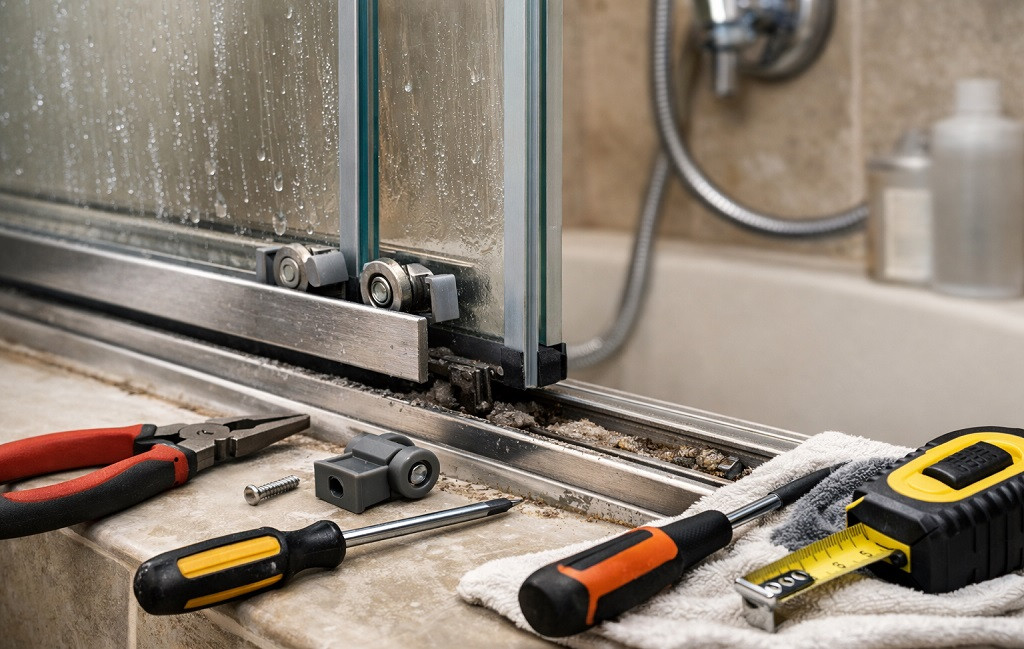
There is nothing more frustrating than starting your morning by wrestling with a shower door that refuses to budge. Whether it’s sticking, screeching, or completely off the track, a sliding shower door that won’t slide is a common home maintenance issue. Fortunately, most of these problems are easily solvable with a bit of patience and the right tools.
In this guide, we’ll walk you through how to troubleshoot, repair, and maintain your shower door to get it gliding like new again.
Why Your Sliding Shower Door Won’t Slide
In most cases, a stuck shower door isn’t broken—it’s just dirty or neglected. Over time, the environment inside your shower creates the perfect conditions for friction. The primary culprit is usually a combination of soap scum, mineral deposits from hard water, and general debris that builds up inside the tracks. When these substances accumulate, they create a “speed bump” that prevents the rollers from moving smoothly. Beyond debris, mechanical issues like worn-out bearings or hardware that has shifted over time can also cause the door to bind.
Common Problems and Causes
- Soap scum buildup: A sticky residue that creates friction in the track.
- Hard water deposits: Mineral scaling that acts like sandpaper on moving parts.
- Worn rollers: The plastic or metal wheels lose their shape or seize up.
- Bent tracks: Metal tracks can warp due to accidental impact or heavy cleaning pressure.
- Misalignment: The door has shifted, causing it to drag against the frame.
- Loose hardware: Screws holding the rollers or frame in place have vibrated loose.
Tools You’ll Need
You don’t need specialized plumbing equipment for this project. Most households already have the necessary items:
- Screwdriver set (Phillips and flathead)
- White vinegar and a spray bottle
- Nylon scrub brush or old toothbrush
- Microfiber cloths or paper towels
- Silicone-based lubricant (Avoid oil-based products like standard WD-40)
- Safety glasses and work gloves
- Replacement rollers (Check your specific model if needed)
Troubleshooting & Repair — Step-by-Step Guide
1. Perform an Initial Inspection
Before grabbing your tools, examine the door. Check if the door is visibly crooked or if the rollers appear to be physically jumping off the track. Gently lift the door to see if it’s merely sticking or if it is mechanically obstructed.
2. Clean the Track and Remove Debris
Most issues are solved right here. Spray white vinegar generously into the bottom track. Let it sit for 5–10 minutes to break down soap scum and mineral deposits. Use your nylon brush to scrub the track thoroughly, then wipe away the loosened gunk with a damp cloth.
3. Inspect and Clean the Rollers
If the track is clean but the door is still hard to open, the problem is likely the rollers. Check for hair wrapped around the wheel axle. Use tweezers or a toothpick to pull out any debris.
4. Remove the Rollers
If cleaning in place doesn’t work, you must remove the door. Have a partner assist you in lifting the door off the track. Once removed, use your screwdriver to detach the roller assemblies from the door frame.
5. Clean or Replace Worn Rollers and Bearings
Inspect the wheels. If they don’t spin freely or look pitted/cracked, they need to be replaced. If they are in good shape, soak them in a vinegar-water solution, dry them, and apply a small amount of silicone lubricant to the bearing.
6. Check for Track Damage
Inspect the metal track for dents or bends. If you find a small dent, you can often gently tap it back into place with a rubber mallet and a block of wood to protect the metal finish.
7. Reinstall and Adjust the Door
Place the door back onto the track. Most modern shower doors have adjustment screws on the rollers. Tighten or loosen these screws to raise or lower the door until it sits level and moves without dragging.
8. Test the Door and Perform a Final Inspection
Slide the door back and forth several times. It should move effortlessly. Ensure all screws are tightened snugly and verify that the door is securely seated in the track guides.
Common Sliding Shower Door Problems and Fixes
Sliding shower doors can develop several common issues over time, such as sticking, misalignment, water leakage, loose glass panels, or dirt buildup on the tracks and rollers. These problems usually occur due to regular wear and tear, soap scum accumulation, or damaged hardware components. Fortunately, most of these issues can be fixed with simple DIY solutions like cleaning the tracks, adjusting the rollers, replacing worn parts, or tightening loose fittings. Understanding the root cause of each problem helps ensure a quicker repair and keeps your shower door operating smoothly for a longer time.
1. Door Won’t Slide Smoothly
A sliding shower door that sticks, drags, or requires excessive force to move is one of the most common issues homeowners face. This problem is usually caused by dirt buildup, mineral deposits, worn rollers, or damaged tracks.
How to Fix It
- Inspect the track for soap scum, hair, and debris.
- Clean the track thoroughly using a brush and a mixture of warm water and vinegar.
- Check the rollers for dirt, corrosion, or visible wear.
- Apply a silicone-based lubricant to the rollers and track. Avoid oil-based lubricants, which attract dirt.
- If the rollers are cracked, worn, or no longer rotate freely, replace them with compatible replacement rollers.
- Test the door several times to ensure it moves smoothly along the track.
2. Water Leaking
Water leaking from the shower enclosure can damage nearby flooring and create mold or mildew problems. Leaks are often caused by worn seals, misaligned doors, or gaps around the frame.
How to Fix It
- Inspect the bottom sweep, side seals, and weatherstripping for damage or wear.
- Replace any cracked, brittle, or missing seals.
- Check that the door closes completely and aligns properly with the frame.
- Tighten loose screws and hardware that may allow the door to shift.
- Apply bathroom-grade silicone sealant to any gaps around the frame where water may escape.
- Allow the sealant to cure fully before using the shower.
3. Misaligned Door
A shower door that appears crooked, jumps off the track, or fails to close properly may be misaligned. This often occurs due to loose hardware, worn rollers, or accidental impacts.
How to Fix It
- Examine the door’s alignment from both inside and outside the shower.
- Tighten any loose mounting screws or brackets.
- Inspect the rollers and guides for wear or damage.
- Adjust the roller height according to the manufacturer’s instructions.
- Ensure the door sits evenly within the track and frame.
- Open and close the door several times to confirm proper alignment.
4. Glass Rattles or Feels Loose
If the glass panel rattles during operation or feels unstable, the mounting hardware or support components may have loosened over time.
How to Fix It
- Carefully inspect all screws, brackets, and retaining clips.
- Tighten any loose hardware without overtightening, which could stress the glass.
- Check rubber gaskets and cushions for wear or deterioration.
- Replace damaged gaskets to restore a secure fit.
- Verify that the glass panel sits properly within its frame.
- Test the door to ensure it operates quietly and securely.
5. Dirty Tracks and Glass
Soap scum, hard water stains, and mildew can accumulate on shower door tracks and glass surfaces, affecting both appearance and performance.
How to Fix It
- Remove loose debris from the track using a vacuum or soft brush.
- Spray the track and glass with a vinegar-and-water solution or a non-abrasive bathroom cleaner.
- Allow the cleaner to sit for several minutes to loosen mineral deposits.
- Scrub gently using a soft brush or microfiber cloth.
- Rinse thoroughly with clean water and dry the surfaces.
- Repeat the cleaning process regularly to prevent future buildup and maintain smooth door operation.
When Should You Replace the Rollers or Track?
If you have thoroughly cleaned and lubricated the system but the door still binds, your rollers have likely reached the end of their lifespan. If the metal track itself is heavily corroded, bent beyond repair, or pulling away from the wall, it is time for a replacement.
Signs It’s Time to Call a Professional
- The door is exceptionally heavy (e.g., thick frameless glass).
- You suspect the wall anchors are loose or the frame is pulling away from the tile.
- You are uncomfortable handling heavy, tempered glass panels, which can shatter if handled improperly.
How to Prevent Sliding Shower Door Problems
Consistent maintenance is the secret to a long-lasting shower door. A quick wipe-down after every shower prevents soap scum from hardening in the first place.
Tips for Buying Replacement Rollers
- Roller material: Stainless steel bearings are superior to plastic.
- Wheel diameter: Measure your old wheels precisely; even a 1mm difference matters.
- Bearing quality: Look for smooth-rolling ball bearings.
- Corrosion resistance: Ensure they are rated for high-moisture environments.
- Compatibility: If possible, look for brand-specific replacements or universal kits with adjustable mounting holes.
Daily Maintenance Tips
- Squeegee after use: Keep glass and tracks dry.
- Weekly wipe-down: Give the tracks a quick wipe with a damp cloth.
- Watch the screws: Give hardware a quick check every month to ensure nothing has loosened from constant vibration.
Frequently Asked Questions
Can I use WD-40 on shower door rollers?
No. Standard WD-40 is a solvent, not a long-term lubricant. It can actually attract more dust and debris over time. Always use a silicone-based lubricant.
How often should I clean shower door tracks?
To keep your door moving smoothly, aim for a deep cleaning of the tracks once every month.
How long do shower door rollers last?
With proper care, high-quality rollers can last 5 to 10 years. However, in hard water areas, they may need replacement sooner.
Why does my shower door keep coming off the track?
This is usually caused by worn-out rollers or the door being out of alignment. Check that your adjustment screws are tight and that the rollers are securely locked into the track guide.
Final Thoughts
Fixing a sliding shower door that won’t slide is a highly rewarding DIY project that can save you a significant amount of money in repair fees. By keeping the tracks clean and ensuring your rollers are in good shape, you’ll enjoy a smooth, quiet shower experience for years to come.