
Commercial restrooms are undergoing a massive shift toward sustainability, and waterless urinals are at the forefront of this movement. If you are looking to cut utility costs, boost your building’s eco-credentials, or simplify facilities management, understanding this plumbing technology is essential.
This comprehensive guide breaks down how waterless urinals work, their pros and cons, installation requirements, and how they stack up against traditional flush fixtures.
What Is a Waterless Urinal?
A waterless urinal is a specialized plumbing fixture designed to dispose of liquid waste without utilizing water or a traditional flushing mechanism. Visually, they look very similar to standard porcelain or composite urinals, but they lack a flush valve, water supply line, and spreader nozzle.
By eliminating the flush altogether, a single waterless unit can save thousands of gallons of freshwater every year while connecting directly to existing standard sewer lines.
How Does a Waterless Urinal Work?
The concept of a flush-free restroom often sparks confusion, but the engineering relies on simple laws of physics.
The Core Working Principle
Standard toilets and urinals use a rush of water to create a siphon that pushes waste through a P-trap and into the sewer line. The standing water in that trap also acts as a physical block against foul sewer gases.
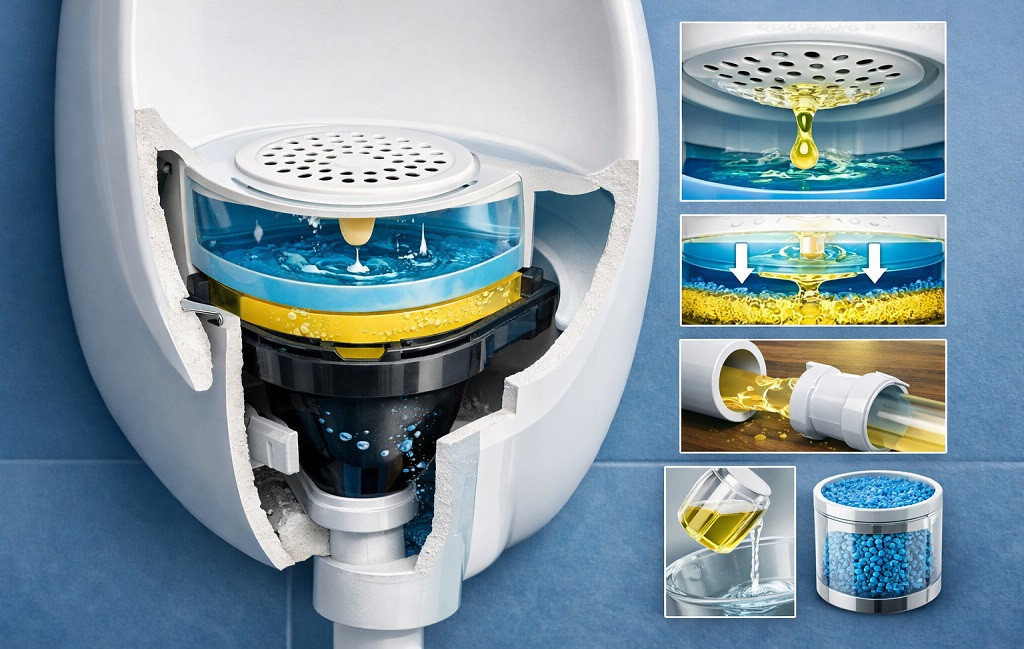
Waterless urinals replace this water barrier with either a liquid sealant or a mechanical one-way valve. Gravity pulls the liquid waste down through the fixture, and the specialized trap allows it to pass into the drain lines while permanently blocking odors from traveling upward into the restroom.
Types of Waterless Urinal Technologies
Manufacturers approach this core principle using two main design frameworks:
- Liquid Seal Systems: These rely on a lightweight, hydrophobic (water-repelling) liquid that sits inside a dedicated trap assembly. Because urine is primarily water, it is denser than the sealant oil. The urine sinks rapidly through the oil layer, while the oil immediately reseals on top.
- Mechanical Systems: These utilize a dry, physical barrier—such as a flexible silicone tube or spring-loaded mechanism—that opens dynamically under the weight of liquid and snaps shut immediately afterward.
Types of Waterless Urinals
When choosing a system for your facility, you will generally encounter four distinct variations of these technologies.
Cartridge-Based Systems
The most common commercial setup utilizes a replaceable, engineered plastic cartridge housed at the base of the urinal bowl. The cartridge contains the necessary internal baffles and acts as the reservoir for the sealing liquid. Liquid flows through top entry slots, passes through the sealant, and overflows into the waste line. When the sealant or cartridge is spent, the entire housing is swapped out.
Oil-Seal Systems
Similar to cartridge designs, these systems can sometimes be integrated directly into a permanent trap built into the porcelain itself, requiring only the replenishment of the specialized sealing fluid rather than replacing a structural plastic cartridge. The fluid is often biodegradable, frequently derived from aliphatic alcohols or plant-based oils.
Membrane Systems
Membrane systems eliminate the need for sealing liquids entirely. They feature a cartridge containing a flexible, flat elastomer or silicone tube. When fluid enters, the weight forces the flat tube to open, allowing waste to discharge into the pipe. Once the flow stops, the natural elasticity of the material causes the tube to flatten out and seal tightly, preventing air from escaping back up.
Mechanical Trap Systems
Mechanical traps operate similarly to membrane setups but may feature small internal hinges, weighted flaps, or ball-valve mechanisms. These are engineered to open under minimal liquid weight and close securely when dry, making them highly resilient against shifting air pressure within the drain pipes.
Benefits of Waterless Urinals
Switching away from traditional flush valves offers significant advantages for facility managers, building owners, and environmental footprints.
Saves Water
The primary driver for waterless technology is resource conservation. A standard conventional urinal consumes anywhere from 1.0 to 3.0 gallons of water per flush (gpf), while older fixtures use even more. Modern High-Efficiency Urinals (HEUs) use 0.125 to 0.5 gpf. Waterless units use 0.0 gpf. Over the course of a year, a single high-traffic waterless urinal can conserve between 20,000 and 45,000 gallons of water.
Lower Utility Bills
Less water consumed translates directly into lower operational costs. By cutting out the freshwater demand and reducing the volume of waste sent to local water treatment facilities, commercial properties notice an immediate drop in monthly water and sewage utility statements.
Eco-Friendly
Reducing water consumption helps relieve strain on local municipal water tables and reservoirs. Furthermore, because pumping and treating water requires immense amounts of electricity, reducing building water consumption indirectly shrinks your facility’s overall carbon footprint.
Easier Maintenance
Traditional flush urinals are notorious mechanical failure points. Flushometers leak, sensors fail, batteries die, and valves wear out over time. Waterless urinals have zero moving mechanical plumbing parts above the drain. This completely eliminates valve repairs, stuck handles, and electrical troubleshooting.
Improved Hygiene
It sounds counterintuitive, but waterless urinals are often more sanitary than flush units. Bacteria and viruses thrive in moist environments. The flush mechanism of a traditional urinal creates a microscopic airborne mist—known as a toilet plume—that scatters germs across bathroom surfaces. Waterless urinals stay dry between uses, suppressing bacterial growth and eliminating the aerosolization of pathogens.
LEED Certification Benefits
For projects pursuing green building certifications, waterless fixtures are an excellent asset. Implementing these units helps accumulate critical points under the Water Efficiency (WE) category for LEED (Leadership in Energy and Environmental Design) certification, helping buildings meet mandatory baseline reductions and earn exemplary performance credits.
How to Install a Waterless Urinal
Installing a waterless urinal is incredibly straightforward because it requires half the plumbing connections of a standard fixture.
1.Rough-in the drain line:Height adjustment.
Set the waste pipe connection in the wall. Note that waterless urinals require a slightly lower drain rough-in height compared to flush models to ensure a proper downward slope for gravity drainage.
2.Mount the hanger brackets:Wall preparation.
Secure the heavy-duty mounting brackets to the wall studs using a level, ensuring compliance with standard or accessible height guidelines.
3.Cap the water supply line:For retrofits.
If replacing a traditional urinal, shut off the water supply, remove the old flushometer, and securely cap off the internal water line behind the wall or at the stub-out.
4.Hang and seal the fixture:Gasket installation.
Apply a sanitary flange gasket to the waste outlet, carefully hang the porcelain fixture onto the wall brackets, and tighten the mounting bolts to compress the seal.
5.Insert the trap assembly:Final step.
Lock the cartridge or mechanical valve into the base of the bowl, fill it with water first (if required by the manufacturer to prime the trap), and add the specified amount of sealing liquid.
Things to Consider Before Installing Waterless Urinals
Before buying fixtures for your facility, look closely at infrastructure compatibility, costs, and regional policies.
Retrofitting and ADA Compliance
When retrofitting older buildings, you must ensure the existing copper or cast-iron drain lines are in good condition. Regarding accessibility, waterless urinals must comply with Americans with Disabilities Act (ADA) standards, meaning the rim of the bowl must sit a maximum of 17 inches above the finished floor, with clear floor space provided for a forward approach.
Connecting a Waterless Urinal
Waterless urinals should never be connected directly to a copper drain line without assessing potential corrosion risks, as undiluted urine can accelerate copper degradation. Standard PVC or ABS plastic drain piping is highly recommended. Additionally, they should ideally be installed downstream from a flush fixture (like a toilet or sink) so that greywater occasionally flushes out the shared main line, preventing the buildup of struvite (pipe crystals).
Cartridge Life and Cost
While you eliminate the cost of water, you introduce an ongoing operational expense: replacement cartridges or sealing fluids. A standard liquid sealant cartridge lasts for roughly 1,500 to 7,000 uses before requiring replacement. Budgets must account for these recurring material costs.
Rebates and Local Incentives
Because water conservation is a priority in arid climates, many municipal water districts and local governments offer aggressive financial incentives. Check with your city’s utility department; you may qualify for substantial cash rebates per fixture, significantly offsetting the upfront procurement costs.
Where Can You Use a Waterless Urinal?
Waterless urinals perform exceptionally well in high-traffic, managed environments where traditional plumbing maintenance is costly or water infrastructure is constrained. Ideal settings include:
- Commercial Office Buildings: Reduces overhead and contributes to corporate sustainability goals.
- Stadiums and Entertainment Venues: Handles intense surges of foot traffic without drop-offs in water pressure or mechanical failure.
- Schools and Universities: Cuts down on vandalism targets (like broken flush handles) and reduces baseline utility costs.
- Parks and Remote Facilities: Perfect for rest stops, campgrounds, or eco-lodges where hauling freshwater or managing large septic volumes is difficult.
Waterless Urinals and Smell: What You Need to Know
The number one concern buyers have is odor. When properly maintained, a waterless urinal smells less than a traditional flush urinal.
Urine itself is relatively odorless when it leaves the body. The classic “restroom smell” occurs when urine reacts with water and air, causing volatile organic compounds to breakdown and release ammonia gas. Because waterless urinals quickly shed liquid and seal it away beneath an airtight barrier, the chemical reaction that creates ammonia is suppressed.
If a waterless urinal smells bad, it is almost always due to one of three maintenance issues:
- The sealing liquid has washed away and needs replenishment.
- The cartridge has exceeded its operational lifespan.
- Janitorial staff are using improper, harsh chemicals that break down the oil barrier.
How to Design a Bathroom That Includes a Waterless Urinal
If you are planning a modern commercial restroom from scratch, integrate these design strategies to optimize performance:
- Proper Piping Slopes: Ensure waste lines feature a minimum drop slope of 1/4 inch per foot to keep fluid moving briskly via gravity.
- Strategic Layout Placement: Place waterless urinals at the “upstream” end of a plumbing battery, with traditional flushing toilets or hand sinks situated “downstream.” The sudden rush of water from the toilets will naturally flush out shared drain lines and prevent crystallization.
- Proper Ventilation: Design air return vents near the floor or fixture clusters to maintain active air exchanges, ensuring the room remains fresh.
Waterless Urinal Maintenance
Janitorial staff must be trained on waterless protocols, as standard bathroom cleaning habits can ruin the specialized traps.
Daily Cleaning
Wipe down the porcelain surface daily with a soft cloth and a neutral, non-abrasive cleaner. Spray the inside of the bowl and wipe clean.
⚠️ Warning: Never dump a bucket of dirty mop water down a waterless urinal. The heavy volume of water will completely flush out the lightweight sealing liquid, leaving the trap unprotected against sewer smells.
Weekly Maintenance
Check the fluid levels of the cartridge. If you notice any odors or see that the tinted sealing fluid is no longer visible at the top of the cartridge trap, add a fresh blast of sealing fluid according to manufacturer specifications.
Cartridge Replacement
When a cartridge reaches the end of its lifecycle (slow draining or persistent odor), use the manufacturer-provided key to unlock the unit from the housing. Lift it out, discard it in a standard waste bin, clean the internal housing seat, insert a fresh cartridge, and prime it with water and sealant.
Common Mistakes to Avoid
- Using Harsh Chemicals: Avoid bleach, acid-based cleaners, or heavy disinfectants. These chemicals chemically alter or dissolve the sealing fluid.
- Using Urinal Cakes: Standard pucks or blocks dissolve slowly and leave a sticky residue that clogs the entry slots of waterless cartridges.
- Neglecting the Sealant: Treating a waterless urinal like a “set-and-forget” fixture will inevitably cause odor issues when the oil barrier dissipates.
Best Practices Summary
Keep a clear calendar log for cartridge swaps based on your building’s foot traffic. Train all temporary or nightly cleaning crews specifically on the “no bucket dumping” rule to safeguard your investment.
Waterless Urinal vs. Traditional Urinal
Feature | Waterless Urinal | Traditional Flush Urinal |
Water Usage | 0 gallons per flush | 0.125 to 3.0+ gallons per flush |
Upfront Cost | Moderate (Saves on flushometers and piping) | Standard fixture pricing + valve assemblies |
Hygiene | High (Dry surface, no airborne bacterial plume) | Moderate (Moist surface, prone to aerosolizing germs) |
Odor Control | Excellent (If sealant is actively maintained) | Moderate (Prone to stagnant water ammonia smells) |
Maintenance | Low (No moving parts, routine cartridge swaps) | High (Valve rebuilds, sensor replacements, leaks) |
Installation | Simple (Drain line connection only) | Complex (Requires both water supply and drain lines) |
Common Drawbacks
While the benefits are extensive, a balanced approach requires looking at the challenges associated with the technology.
Cartridge Cost
The lifetime cost of purchasing replacement cartridges and proprietary fluids can minimize some of the financial savings earned on your water bill. Facilities must balance the water savings against ongoing material procurement.
Learning Curve
There is an adjustment period for cleaning staff. Overcoming decades of habit regarding flushing fixtures or pouring cleaning buckets down the nearest drain requires proactive communication and visual training aids.
Cleaning Requirements
Because there is no active water stream scrubbing the bowl with every use, residue can accumulate on the porcelain surface faster than in flush models. Consistent, gentle wiping is non-negotiable to keep the fixture looking pristine.
Public Perception
Some visitors associate a lack of running water with poor hygiene or broken plumbing. Placing clear, educational signage above the fixtures explaining the environmental technology can turn a potential complaint into a positive public relations touchpoint.
Frequently Asked Questions
- Do waterless urinals clog more easily than regular ones?
No. Because they do not drop heavy paper products into the waste line, structural clogs are rare. However, if the pipes are never cleared by downstream greywater, uric sediment can accumulate over several years, requiring a routine line snake.
- How long does a waterless urinal cartridge last?
On average, a cartridge lasts for 3,000 to 7,000 uses. In a standard office environment, this equates to roughly 3 to 6 months per cartridge, while high-volume settings like stadiums may require monthly replacements.
- Can I use standard bathroom cleaners on them?
No. You must avoid bleach, scouring powders, and highly acidic cleaners. Use only mild, neutral pH spray cleaners recommended by the urinal manufacturer to avoid washing away or dissolving the oil barrier.
- Are waterless urinals allowed by building codes?
Yes. Major international plumbing codes—including the Uniform Plumbing Code (UPC) and International Plumbing Code (IPC)—approve waterless urinals, provided the fixtures conform to ASME A112.19.19 standards.
Final Thoughts
Waterless urinals are a highly efficient, field-tested solution for lowering utility expenses and conserving water resources in commercial spaces. While they eliminate mechanical breakdowns and reduce bacterial spread, their long-term success relies entirely on consistent janitorial habits and timely trap maintenance. By pairing the right technology with trained staff, your facility can lock in reliable, odor-free performance for years to come.