
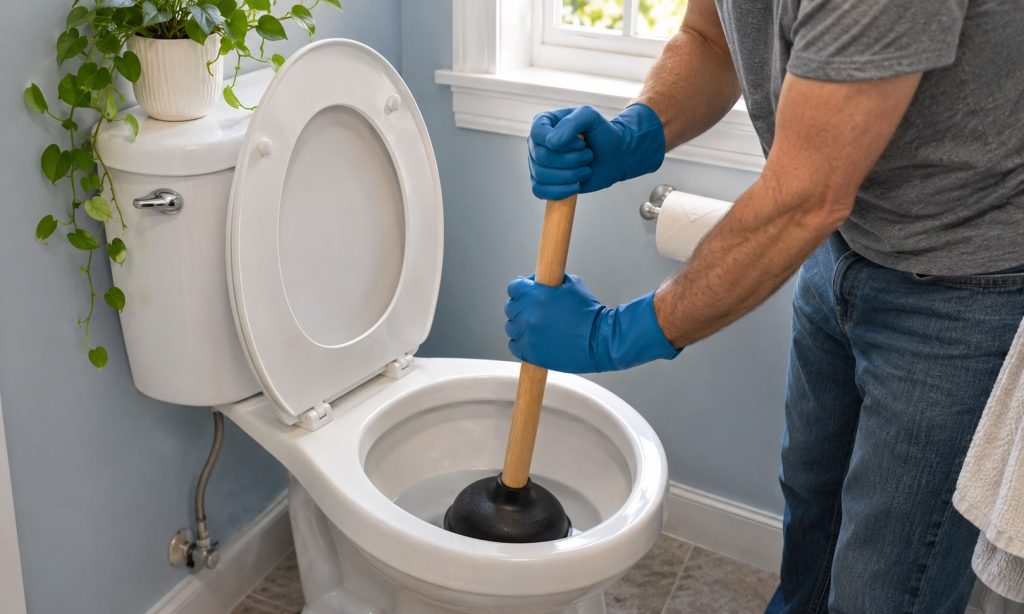
The toilet bowl fills higher than usual, the water barely moves, and there’s a bottle of drain cleaner under the sink. Can you use drain cleaner in a toilet? Skip ordinary chemical drain openers. If the bowl contains no cleaner, a flange plunger is usually the first tool to try for a clog caused by toilet paper or waste. If you already poured cleaner into the bowl, stop and leave the water undisturbed.
The right move depends on what went down, what’s in the bowl now, and whether other fixtures are backing up. A wad of toilet paper calls for a different approach from a missing bath toy. And if the shower drain starts bubbling when the toilet flushes, put the plunger down and look at the bigger plumbing problem.
Can you use drain cleaner in a toilet with standing water?
A bottle may say it works through standing water in a sink or tub. Check which fixtures the directions actually cover. A claim about standing water says how the formula behaves in a labeled application. The directions still need to name the toilet as an approved use. The same distinction applies to phrases such as “safe for plastic pipes” or “septic safe.” Pipe material, septic compatibility, and fixture suitability are separate questions.
Can you use drain cleaner in a toilet when the bowl is nearly full? With a blocked bowl, the liquid you add has nowhere to go. If the cleaner fails to reach or clear the obstruction, you may be left with contaminated water near the rim. A second flush could send it onto the floor. Plunging or scooping can splash it onto your skin or into your eyes.
Why the toilet trapway matters
A toilet has a curved passage called a trapway. A bend holds water between flushes, creating a seal that helps keep sewer gases out of the room. An obstruction can lodge inside that passage or farther down the drain. From above, all you may see is the water rising and then draining slowly.
Manufacturers describe common sink and tub clog openers as treatments for buildup such as hair and soap residue. A toilet blockage might be a concentrated wad of paper, wet wipes, or a plastic cap. The toilet’s trapway can also keep some cleaners from reaching the trouble spot effectively. A trapped toy has a straightforward solution, even if reaching it takes some work. It needs to come out.
How to read the bottle
| Product type | What the label tells you |
|---|---|
| Chemical drain opener | Check the approved fixtures. Skip ordinary sink, shower, and tub formulas for a clogged toilet. |
| Toilet bowl cleaner | Look for directions about cleaning porcelain or removing stains. Those directions address cleaning the bowl surface. |
| Enzyme or bacterial drain treatment | Check for explicit toilet approval and whether the product is for maintenance, slow drainage, or something else. |
What to do if you already poured drain cleaner into the toilet
A homeowner in a plumbing forum described a familiar dilemma. After the toilet overflowed, someone added a chemical opener. Hours later, the bowl was still full, and the household was worried about splashes from plunging or removing the water. Their account illustrates how quickly a routine clog can become harder to handle.
Can you use drain cleaner in a toilet and then plunge if the liquid level drops? Keep tools out of the bowl while cleaner may still be present. A lower waterline tells you that some liquid moved. It leaves open the question of what remains in the bowl or trapway.
- Take the toilet out of use. Leave the handle alone. Keep children and pets out of the bathroom, and tell everyone in the household why the toilet is off-limits.
- Leave the bowl water alone. Skip the plunger, auger, and bucket. Avoid flushing a blocked or nearly full bowl. Follow applicable label safety instructions and call the manufacturer if you need product-specific guidance.
- Keep other products out of the bowl. Avoid adding bleach, vinegar, toilet bowl cleaner, or a second drain opener. Household cleaners can react, and the risk depends on the ingredients involved.
- Tell the plumber what went in before work begins. Give the product name, roughly how much was used, and when it was added. Mention any other products that may have been in the bowl. Keep the original container or a photo of the label available.
If cleaner splashes or someone breathes fumes
For an eye splash, start rinsing immediately with room-temperature water for at least 15 to 20 minutes. Remove contact lenses without delaying the rinse. For skin exposure, remove contaminated clothing and rinse the skin under running water for at least 15 minutes. If fumes are present, move to fresh air. In the U.S., call Poison Control at 1-800-222-1222 for specific guidance. For swallowed cleaner, call promptly and avoid inducing vomiting. Call 911 immediately if someone has trouble breathing, collapses, has a seizure, or can’t be awakened.
How to unclog a toilet when no cleaner has been added
Can you use drain cleaner in a toilet if one flush sent the water almost to the rim? Leave the handle alone and deal with the rising water first. Another flush is a remarkably efficient way to turn one chore into two.
Stop the bowl from filling
Find the small supply valve behind the toilet, near the wall or floor. Close it gently. A round valve generally turns clockwise, while a quarter-turn valve operates according to its design. If the valve is stuck or badly corroded, leave it alone and get help. The shutoff controls new water entering the tank. Water already in the tank can still flow into the bowl.
Give the bowl time to settle. Wait until there’s enough room below the rim to work without spilling. If the water rises on its own or when someone uses another fixture, stop using household plumbing and arrange urgent help. A supply valve at the toilet can’t stop wastewater coming back up the drain.
Start with a flange plunger for a likely soft clog
A flange plunger has a rubber extension that fits into the toilet outlet. That shape helps it seal against the opening. A flat sink plunger can slip or leak around the edges, even when you put plenty of effort into it.
- Wear waterproof gloves and eye protection. Position the flange over the outlet with enough bowl water to cover the rubber cup.
- Press gently on the first stroke to push air out of the cup and reduce splashing.
- Make several controlled push-and-pull strokes while keeping the seal. Lift the plunger slowly and watch the water level.
- Once the level drops and stays near normal, add a small amount of plain water and see whether it drains. If it does and the bowl has plenty of room, restore the supply and try one test flush. If the water rises unusually high again, stop.
If you suspect a solid item or wipes, the guide for a toilet clogged with wipes or an object walks through the signs that retrieval may be the better option.
Try a toilet auger for a stubborn local blockage
A toilet auger, also called a closet auger, has a cable that feeds through a curved guide. Choose a toilet-specific design with a protective sleeve where it contacts the bowl. With space below the rim and no cleaner present, set the guide at the outlet and turn the handle as you advance the cable according to the tool instructions. Retract slowly. If the cable meets a hard stop or binds, avoid forcing it.
If the toilet still backs up after careful attempts, call a plumber. The object may be lodged where the tool can’t retrieve it, or the obstruction may be beyond the reach of a toilet auger. A plumber may need to lift the toilet or inspect the drain from another access point.
What a recurring clog tells you
Can you use drain cleaner in a toilet that clogs every week? A repeat clog is a reason to track the symptoms. If the toilet flushes well, then struggles again after ordinary use, tell the plumber how often it happens and what you’ve already tried. A partly lodged object can let water through between clogs. If the flush has always been weak, mention that too. The tank and flush mechanism may need a separate check.
Look at what happens elsewhere in the house. A tub that gurgles when you flush, a shower drain that backs up when the washer empties, or several fixtures slowing down together can point to a shared drain or sewer problem. Stop running water, including the washer and dishwasher, and contact a plumber or your local sewer utility, as appropriate. Renters should notify building maintenance promptly.
To reduce repeat clogs, flush only human waste and toilet paper. Put wipes, paper towels, and hygiene products in the trash. A small wastebasket within reach is more effective than a household debate over what counts as flushable.
Frequently Asked Questions
Can you use drain cleaner in a toilet if the label says “septic safe”?
Check that the label specifically approves toilets and covers your intended use. “Septic safe” alone does not establish either. The U.S. Environmental Protection Agency advises septic-system owners to avoid chemical drain openers for clogged drains. For a blockage, start with an appropriate mechanical option if the bowl is free of chemicals, or call a plumber.
Can you use drain cleaner in a toilet if it’s an enzyme formula?
Only when the specific label permits use in toilets. Read whether it covers a clog or describes gradual maintenance. A fully blocked toilet or a known foreign object calls for a different approach. See the guide to how to use enzyme drain cleaner for help reading directions and understanding those limits.
Can you use drain cleaner in a toilet if you rinse it out right afterward?
Skip that approach. A blocked toilet can overflow when you flush. Sink or tub rinsing instructions are specific to the fixtures covered by the label. If someone already added cleaner, leave the water undisturbed, follow the manufacturer’s safety guidance, and tell the plumber what was used.
Is baking soda and vinegar a good way to clear a toilet clog?
The fizz gives you little information about where the blockage is or what caused it. Use a flange plunger for a suspected soft clog if there are no chemicals in the bowl. If cleaner has already been added, keep both baking soda and vinegar out of the toilet and follow the product-specific guidance above.
Can I flush again if the water eventually goes down?
A bowl that drains slowly can still be partly blocked. With no chemical cleaner present, watch how the bowl responds to a small amount of plain water before committing to a full flush. If it rises and lingers again, stop. If other fixtures also back up, stop using water and get help with the shared drain.
Final Words
Can you use drain cleaner in a toilet? Leave ordinary chemical drain openers under the sink. If the bowl is chemical-free and you suspect a soft clog, use a flange plunger first. A toilet auger can help with a stubborn local blockage. If cleaner is already in the bowl, leave it alone and give the plumber the product details before work starts. If several fixtures are backing up, stop using household water and get the drain checked.
Sources
- Poison Control guidance on drain cleaner hazards
- Poison Control first aid for poisonings
- Poison Control guidance on household cleaner safety
- Manufacturer guidance on drain cleaner fixture compatibility
- EPA guidance on caring for a septic system
- Baltimore City public works guidance for sewer backups
- Manufacturer guidance on the porcelain guard of a toilet auger