
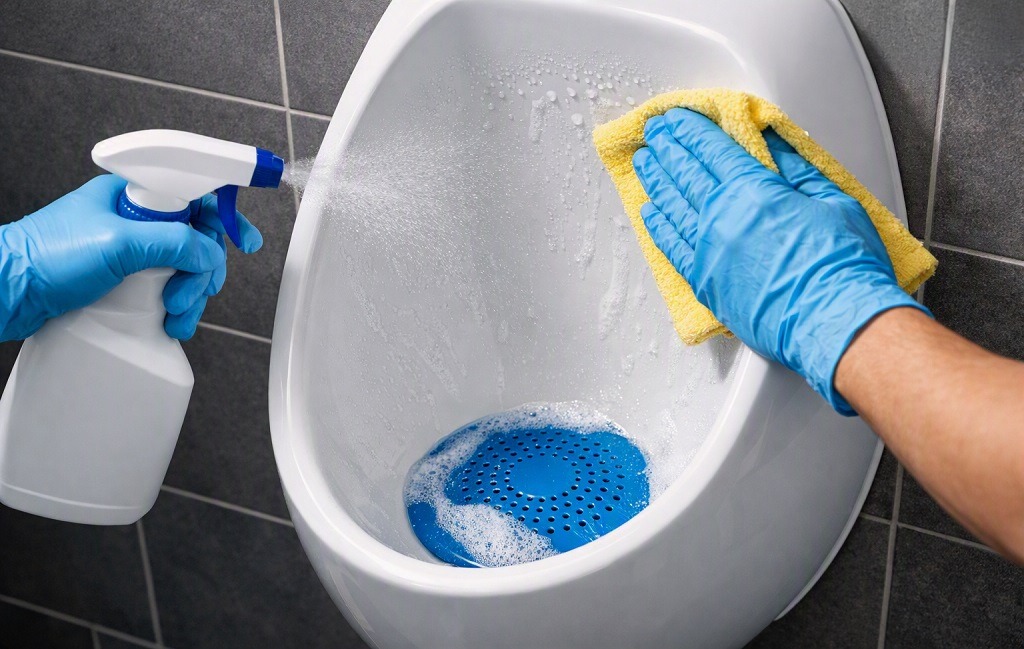
Waterless urinals have become increasingly popular in commercial buildings, schools, airports, offices, and even some residential properties due to their ability to conserve thousands of gallons of water every year. Unlike traditional urinals that rely on water for flushing, these fixtures use specially designed cartridges or sealant liquids to block sewer gases while allowing urine to drain efficiently.
Although they reduce water consumption and utility costs, waterless urinals require a different cleaning approach. Using the wrong cleaning products or techniques can damage the cartridge, reduce odor control, shorten the fixture’s lifespan, and even void the manufacturer’s warranty.
The good news is that maintaining a waterless urinal isn’t difficult when you follow the proper procedures. With regular cleaning and the right supplies, you can keep the fixture hygienic, odor-free, and functioning efficiently for years.
In this guide, you’ll learn:
- How waterless urinals work
- Which cleaning products are safe
- Step-by-step cleaning instructions
- Common mistakes to avoid
- Tips to eliminate odors
- Best maintenance practices to extend cartridge life
Whether you’re a facility manager, janitorial professional, business owner, or homeowner, this guide will help you clean a waterless urinal safely and effectively.
What Is a Waterless Urinal?
A waterless urinal is a plumbing fixture designed to collect and drain urine without using water for flushing. Instead of relying on a flush valve, it uses gravity along with a specially engineered cartridge or liquid seal to allow waste to pass into the drainage system while preventing unpleasant sewer gases from escaping.
These fixtures are widely used in:
- Office buildings
- Shopping malls
- Hotels
- Schools and universities
- Stadiums
- Airports
- Restaurants
- Manufacturing facilities
- Eco-friendly residential homes
Because they eliminate flushing, waterless urinals can save tens of thousands of gallons of water annually, making them an environmentally responsible choice.
How Does a Waterless Urinal Work?
Although designs vary by manufacturer, most waterless urinals operate using the same basic principles.
When someone uses the urinal, the urine flows through a removable cartridge or trap. Inside the cartridge is either:
- A lightweight sealing liquid, or
- A mechanical valve designed to open only when liquid passes through.
This barrier prevents sewer gases from traveling back into the restroom while allowing waste to drain freely.
Over time, debris, uric scale, and contaminants can accumulate around the cartridge and bowl. Regular cleaning prevents these deposits from causing odors, blockages, or reduced performance.
Benefits of Waterless Urinals
Understanding the advantages of waterless urinals highlights why proper maintenance is worth the effort.
Significant Water Savings
Traditional urinals can use between 0.5 and 1 gallon of water per flush. In busy commercial facilities, this adds up quickly. Waterless urinals eliminate flushing altogether, potentially saving thousands of gallons of water each year.
Lower Utility Bills
Reduced water consumption means lower monthly water and sewer costs, making waterless urinals an economical long-term investment.
Environmentally Friendly
By conserving water, these fixtures support sustainability initiatives and can contribute to green building certifications such as LEED.
Reduced Plumbing Requirements
Without flush valves or water supply lines, there are fewer components that require repair or replacement, simplifying maintenance.
Cleaner Restrooms
When cleaned correctly, waterless urinals reduce standing water, helping minimize bacterial growth and keeping restroom floors drier.
Why Proper Cleaning Matters
Some people mistakenly believe that because a waterless urinal doesn’t use water, it requires little or no maintenance. In reality, regular cleaning is essential for both hygiene and performance.
Here are the main reasons why proper cleaning is important:
Prevents Unpleasant Odors
The most common complaint about poorly maintained waterless urinals is odor. Regular cleaning removes urine residue, bacteria, and organic buildup before they produce unpleasant smells.
Extends Cartridge Life
Cartridges are one of the most important—and costly—components of a waterless urinal. Keeping the bowl and drain clean reduces contamination and helps cartridges last as long as intended by the manufacturer.
Prevents Mineral Deposits
Over time, urine can leave behind mineral deposits and uric scale. If these deposits accumulate, they may restrict drainage and reduce the urinal’s efficiency.
Improves Hygiene
Routine cleaning removes bacteria, germs, and surface contaminants, creating a cleaner and healthier restroom environment for everyone.
Reduces Long-Term Maintenance Costs
Preventive maintenance is almost always less expensive than repairing damaged cartridges, unclogging drains, or replacing neglected fixtures.
Protects the Manufacturer’s Warranty
Many manufacturers specify approved cleaning products and maintenance procedures. Using harsh chemicals or abrasive tools may void warranty coverage.
Supplies You’ll Need
Before you begin cleaning, gather the appropriate tools and products.
Item | Purpose |
Disposable gloves | Protect your hands from bacteria and cleaning chemicals |
Microfiber cloth | Wipe surfaces without scratching |
Soft sponge | Gentle cleaning of the bowl |
Soft-bristle brush | Remove residue safely |
Neutral pH cleaner | Clean without damaging the cartridge |
Spray bottle | Apply cleaner evenly |
Paper towels | Dry exterior surfaces |
Approved enzyme cleaner (if recommended) | Help control odors and organic buildup |
Pro Tip: Always check the urinal manufacturer’s maintenance instructions before using any cleaning product. Some brands recommend specific cleaners to protect proprietary cartridges or sealant systems.
Cleaners You Should Never Use
One of the biggest mistakes people make when cleaning a waterless urinal is treating it like a conventional porcelain fixture. Many household or industrial cleaners can damage the urinal’s cartridge, degrade the sealant liquid, or shorten the fixture’s lifespan.
Before using any product, always consult the manufacturer’s maintenance guide.
1. Bleach
Bleach is commonly used to disinfect bathrooms, but it’s generally not recommended for waterless urinals.
Why?
- Can damage cartridge materials.
- May destroy beneficial bacteria in enzyme-based systems.
- Can react with urine residue to create harmful fumes.
- May reduce the effectiveness of odor-control systems.
2. Acid-Based Cleaners
Avoid cleaners containing:
- Hydrochloric acid
- Sulfuric acid
- Phosphoric acid
These products can:
- Damage seals and gaskets.
- Corrode metal components.
- Shorten cartridge life.
3. Abrasive Cleaners
Never use:
- Scouring powder
- Steel wool
- Wire brushes
- Abrasive pads
These can scratch the urinal surface, making it easier for bacteria, stains, and odors to accumulate.
4. Petroleum-Based Solvents
Strong solvents may damage plastic components and cartridge housings.
5. High-Pressure Water
Unlike conventional urinals, waterless models should not be pressure washed.
Excessive water may:
- Disturb the liquid seal.
- Damage the cartridge.
- Reduce odor protection.
Best Cleaning Products for Waterless Urinals
Choose products specifically designed for restroom fixtures or those approved by the urinal manufacturer.
Generally safe options include:
- Neutral pH cleaners
- Mild non-abrasive restroom cleaners
- Manufacturer-approved enzyme cleaners
- Soft disinfectants labeled as safe for waterless urinals
When trying a new product, test it on a small area first and follow the manufacturer’s instructions.
Step-by-Step: How to Clean a Waterless Urinal
Routine cleaning doesn’t take long, but following the correct sequence helps prevent odors and protects the fixture.
Step 1: Wear Protective Gloves
Put on disposable or reusable rubber gloves before beginning.
This protects you from:
- Bacteria
- Cleaning chemicals
- Bodily fluids
If you’re cleaning multiple restroom fixtures, change gloves between tasks if they become heavily contaminated.
Step 2: Inspect the Urinal
Before applying any cleaner, perform a quick visual inspection.
Look for:
- Visible debris
- Stains
- Mineral buildup
- Urine splashes
- Drain blockages
- Signs of cartridge wear
If you notice standing liquid or slow drainage, investigate further before cleaning.
Step 3: Remove Surface Debris
Using a paper towel or disposable cloth, remove:
- Dust
- Tissue
- Hair
- Dirt
- Other loose debris
This prevents debris from entering the drain during cleaning.
Step 4: Apply an Approved Cleaner
Spray a manufacturer-approved neutral pH cleaner onto:
- Interior bowl
- Rim
- Exterior surfaces
- Splash areas
Avoid spraying excessive cleaner directly into the cartridge unless the manufacturer specifically recommends it.
Allow the cleaner to dwell for the recommended time, usually 2–5 minutes, so it can break down grime and bacteria.
Step 5: Gently Clean the Bowl
Using a soft sponge or soft-bristle brush:
- Clean the inside of the bowl.
- Work from the top downward.
- Focus on splash zones.
- Remove urine residue.
- Avoid aggressive scrubbing around the cartridge.
Never use excessive force, as this can damage the cartridge housing or protective surfaces.
Step 6: Clean Exterior Surfaces
Wipe all exterior areas, including:
- Side panels
- Front surface
- Mounting hardware
- Wall area behind the fixture
- Drain cover (if accessible)
Pay special attention to areas frequently touched during routine maintenance.
Step 7: Inspect the Cartridge
The cartridge is the heart of a waterless urinal.
Check for:
- Cracks
- Mineral buildup
- Slow drainage
- Odors
- Physical damage
Do not remove the cartridge unless it requires replacement or the manufacturer’s instructions call for removal during maintenance.
If the cartridge appears damaged or has reached its service life, replace it according to the manufacturer’s recommendations.
Step 8: Wipe Dry
Use a clean microfiber cloth or paper towel to dry all exterior surfaces.
Drying helps:
- Prevent streaks.
- Improve appearance.
- Reduce bacterial growth on damp surfaces.
Step 9: Perform a Final Inspection
Before leaving, verify that:
✔ The bowl is clean.
✔ No cleaning solution remains.
✔ The drain flows properly.
✔ There are no unusual odors.
✔ Exterior surfaces are dry.
✔ The surrounding floor is clean.
A final inspection ensures the urinal is ready for use and helps identify any maintenance issues early.
How Often Should You Clean a Waterless Urinal?
Cleaning frequency depends on traffic and usage.
Location | Recommended Cleaning Frequency |
Residential home | 1–2 times per week |
Small office | Daily |
Large office | Daily or twice daily |
School | Daily |
Restaurant | Several times daily |
Shopping mall | Multiple times daily |
Airport | Every shift |
Stadium | Before, during, and after events |
High-traffic facilities may also need periodic deep cleaning and more frequent cartridge inspections.
Daily Maintenance Checklist
A simple daily routine helps prevent larger maintenance issues.
- Remove visible debris.
- Wipe the bowl and exterior surfaces.
- Clean splash areas.
- Check for unusual odors.
- Confirm proper drainage.
- Inspect for leaks or damage.
These quick tasks can extend the life of the fixture and maintain a pleasant restroom environment.
Weekly Maintenance
In addition to daily cleaning:
- Inspect the cartridge.
- Remove minor mineral deposits.
- Clean surrounding walls and floors.
- Check manufacturer-recommended sealant levels (if applicable).
- Ensure all components remain securely installed.
Consistent weekly maintenance reduces the likelihood of expensive repairs.
How to Remove Odors from a Waterless Urinal
A properly maintained waterless urinal should produce little to no odor. If unpleasant smells develop, they usually indicate a maintenance issue rather than a flaw in the fixture itself. Identifying the root cause is the first step toward resolving the problem.
1. Clean the Bowl Thoroughly
Urine splashes and organic residue can build up on the bowl’s surface, especially around the rim and lower sections. Over time, bacteria feed on these residues, causing unpleasant odors.
Clean the entire bowl with a manufacturer-approved, neutral pH cleaner and a soft cloth or sponge. Avoid abrasive brushes or harsh chemicals that could damage the finish or cartridge.
2. Inspect the Cartridge
The cartridge plays a vital role in sealing sewer gases. As it ages or becomes clogged with debris, it may lose its ability to prevent odors from escaping.
Signs that the cartridge may need attention include:
- Persistent odors after cleaning
- Slow drainage
- Visible debris or mineral buildup
- Exceeding the manufacturer’s recommended service life
If any of these conditions are present, replace the cartridge according to the manufacturer’s instructions.
3. Check the Sealant Liquid (If Applicable)
Some waterless urinals rely on a liquid sealant rather than a mechanical trap. If the sealant level becomes too low, sewer gases can pass through the drain.
Refer to the manufacturer’s guidelines to determine whether your model requires sealant replenishment and the correct product to use.
4. Remove Uric Scale
Over time, urine minerals can form hard deposits known as uric scale inside the drain or around the cartridge. These deposits trap bacteria and contribute to unpleasant odors.
If uric scale is suspected, use a cleaner specifically approved for waterless urinals. Avoid acidic descalers unless the manufacturer explicitly recommends them.
5. Improve Restroom Ventilation
Odors can linger in poorly ventilated restrooms, even if the urinal itself is clean.
To improve air quality:
- Ensure exhaust fans are working properly.
- Keep ventilation systems clean and unobstructed.
- Increase airflow where possible.
Good ventilation helps maintain a fresher restroom environment and reduces moisture buildup.
When Should You Replace the Cartridge?
The cartridge is the core component of most waterless urinals, and replacing it at the right time is essential for proper performance.
Typical Cartridge Lifespan
The lifespan varies by manufacturer and usage. In high-traffic commercial settings, cartridges may need replacement every few months, while those in low-use environments can last much longer. Always follow the service interval recommended for your specific model.
Signs It’s Time to Replace the Cartridge
Consider replacing the cartridge if you notice:
- Persistent odors despite proper cleaning
- Slow drainage
- Frequent clogs
- Visible cracks or damage
- The cartridge has reached its recommended service interval
Delaying replacement can lead to odor issues and reduced system efficiency.
Common Mistakes to Avoid
Avoiding these mistakes will help extend the life of your waterless urinal and keep it operating efficiently.
Using Bleach or Harsh Chemicals
Many people assume stronger cleaners are better. In reality, bleach and harsh chemicals can damage cartridges, seals, and internal components. Use only manufacturer-approved or neutral pH cleaning products.
Scrubbing with Abrasive Tools
Steel wool, scouring pads, and wire brushes can scratch the surface of the urinal. These scratches create places where bacteria, stains, and mineral deposits can accumulate.
Always use soft cloths, sponges, or soft-bristle brushes.
Pouring Large Amounts of Water into the Urinal
Although occasional rinsing may be recommended for certain models, regularly pouring large volumes of water into a waterless urinal can disrupt the liquid seal or interfere with the cartridge’s operation. Follow the manufacturer’s maintenance instructions.
Ignoring Routine Cleaning
Even though the fixture doesn’t flush with water, it still needs regular cleaning. Neglecting maintenance can lead to odor problems, mineral buildup, and shortened cartridge life.
Delaying Cartridge Replacement
A worn-out cartridge cannot effectively block sewer gases. Replacing it on schedule is one of the best ways to maintain an odor-free restroom.
Waterless Urinal Maintenance Tips
Preventive maintenance helps reduce repair costs and keeps your restroom hygienic.
Daily
- Remove visible debris.
- Wipe the bowl and exterior.
- Check for unusual odors.
- Confirm proper drainage.
Weekly
- Inspect the cartridge.
- Clean surrounding surfaces.
- Remove minor mineral deposits.
- Check for leaks or damage.
Monthly
- Review the cartridge’s condition.
- Inspect plumbing connections.
- Confirm that ventilation systems are functioning properly.
Long-Term
- Replace cartridges according to the manufacturer’s recommendations.
- Train maintenance staff on correct cleaning procedures.
- Keep a record of cleaning schedules and cartridge replacements.
A consistent maintenance plan can significantly improve performance and reduce long-term costs.
Waterless Urinal vs. Traditional Urinal Maintenance
Feature | Waterless Urinal | Traditional Urinal |
Water usage | No water required | Uses water with each flush |
Flush valve | Not required | Required |
Cartridge | Usually required | Not required |
Daily cleaning | Yes | Yes |
Mineral buildup | Uric scale can develop | Water scale can develop |
Water conservation | Excellent | Lower |
Utility costs | Lower | Higher |
Specialized maintenance | Cartridge inspection and replacement | Flush valve and plumbing maintenance |
Both types of fixtures require regular cleaning, but waterless urinals demand greater attention to cartridge care and the use of appropriate cleaning products.
Frequently Asked Questions
Can I use bleach to clean a waterless urinal?
It’s generally not recommended. Bleach can damage cartridges, seals, or other components depending on the model. Use a manufacturer-approved or neutral pH cleaner instead.
How often should I clean a waterless urinal?
In most commercial settings, daily cleaning is recommended. High-traffic facilities may require multiple cleanings per day, while residential installations may only need cleaning once or twice a week.
Why does my waterless urinal smell?
Common causes include:
- A worn-out cartridge
- Improper cleaning
- Uric scale buildup
- Low sealant levels (for applicable models)
- Poor restroom ventilation
Can waterless urinals clog?
Yes. Hair, paper, debris, and mineral deposits can restrict drainage if regular maintenance is neglected.
How long do waterless urinal cartridges last?
The lifespan depends on the manufacturer and usage level. Refer to your model’s maintenance guide for the recommended replacement interval.
Do waterless urinals really save water?
Yes. Because they eliminate flushing, waterless urinals can save significant amounts of water over time, particularly in high-traffic commercial buildings.
Conclusion
Waterless urinals are an efficient, environmentally friendly alternative to traditional fixtures, but they require proper maintenance to deliver the best results. Regular cleaning with manufacturer-approved products, routine cartridge inspections, and timely replacement of worn components help prevent odors, extend the fixture’s lifespan, and maintain a clean restroom environment.
By following the step-by-step process outlined in this guide and avoiding harsh chemicals or abrasive tools, you can keep your waterless urinal functioning reliably while reducing long-term maintenance costs. Whether you manage a commercial facility or maintain a residential installation, consistent care is the key to maximizing the benefits of a waterless urinal.