
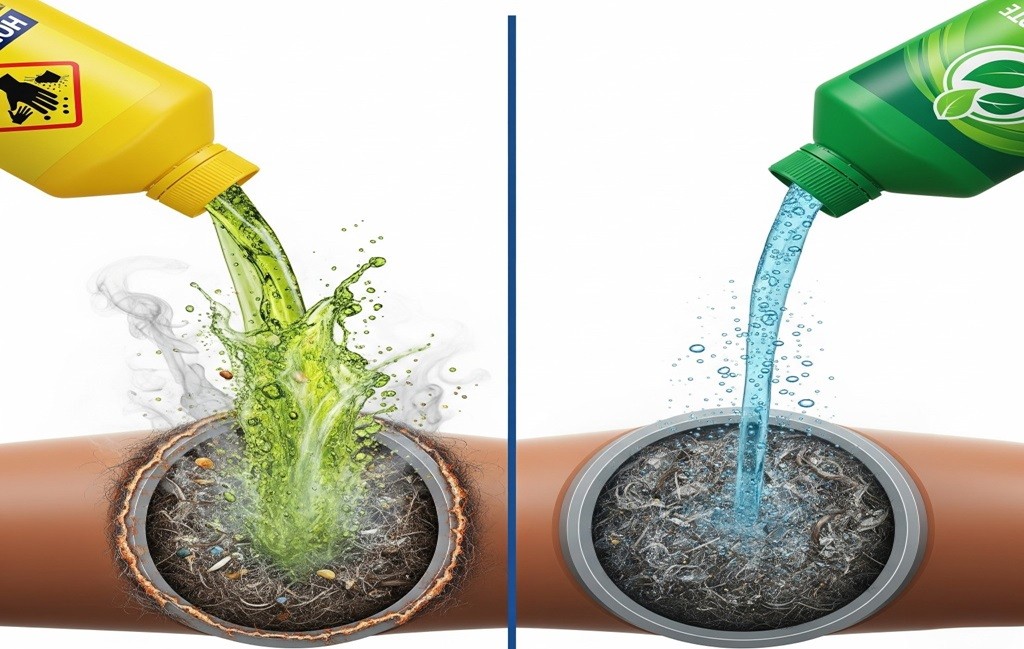
Have you ever stared into a sink or shower drain, watching the water slowly swirl and disappear, or worse, not disappear at all? A clogged drain is a common household headache, and when it strikes, the first thought for many is reaching for a drain cleaner. But faced with shelves full of options, how do you choose? This article will delve into the differences between enzyme and chemical drain cleaners, weighing their pros and cons to help you make the best decision for your home and your pipes.
The Drain Dilemma: Fast Fix or Safe Solution?
When a drain is backed up, the urgency to fix it quickly can be overwhelming. This often leads people to gravitate towards the strongest-sounding solution. However, understanding how different drain cleaners work is crucial for effective and safe maintenance of your plumbing system. Let’s explore the two main contenders: chemical and enzyme-based drain cleaners.
Understanding Chemical Drain Cleaners
Chemical drain cleaners represent the “nuclear option” of plumbing fixes. They are formulated to be aggressive and fast-acting, designed to tackle the toughest clogs in the shortest amount of time. They achieve this through powerful, often dangerous, chemical reactions that can dissolve blockages on contact.
How Do Chemical Drain Cleaners Work
Chemical drain cleaners typically contain highly alkaline substances like sodium hydroxide (lye) or powerful acids like sulfuric acid. When poured down the drain, these chemicals generate intense heat and react with organic matter like hair, grease, and soap scum, effectively dissolving or breaking them down. This method is incredibly fast, but the corrosive nature of these chemicals is a double-edged sword.
The Pros of Chemical Drain Cleaners
- Speed: Chemical drain cleaners are known for their rapid action. They can often clear a clog within minutes to an hour, making them appealing for emergency situations.
- Effectiveness on Tough Clogs: For stubborn blockages caused by hair, grease, and other common culprits, chemical cleaners can be very effective at dissolving the material.
The Cons of Chemical Drain Cleaners
- Safety Risks: These products are highly corrosive and pose significant safety hazards. They can cause severe burns to skin and eyes, and inhaling their fumes can irritate the respiratory system. It’s crucial to wear gloves and ensure good ventilation when using them.
- Potential for Pipe Damage: The intense heat generated and the corrosive nature of these chemicals can damage pipes, especially older metal pipes, PVC pipes, and seals over time. Repeated use can weaken the structural integrity of your plumbing.
- Environmental Impact: Chemical drain cleaners are harmful to the environment. They can contaminate waterways and negatively impact septic systems by killing beneficial bacteria.
Understanding Enzyme Drain Cleaners
Enzyme drain cleaners offer a more natural and biological approach to clearing drains. Instead of using harsh chemicals, they rely on nature’s own processes to get the job done. They are the eco-friendly alternative, designed to be gentle on pipes and the environment while still being effective against organic clogs.
How Do Enzyme Drain Cleaners Work
Enzyme drain cleaners contain beneficial bacteria and enzymes that are specifically designed to target and break down organic waste like hair, grease, food particles, and soap scum. These microorganisms essentially “digest” the clog over time. This method is slower but much safer for both your plumbing and the planet.
The Pros of Enzyme Drain Cleaners
- Pipe Safety: Enzyme cleaners are non-corrosive and gentle on all types of pipes, including old plumbing and septic systems. You don’t have to worry about them causing damage.
- Eco-Friendly: These cleaners are biodegradable and safe for the environment and septic systems. They don’t introduce harsh chemicals into the water system.
- Preventative Maintenance: Enzyme cleaners are excellent for regular use to prevent clogs from forming in the first place. They help maintain a healthy flow in your drains.
The Cons of Enzyme Drain Cleaners
- Slower Action: Enzyme cleaners work gradually and typically take several hours or even overnight to fully clear a clog. They are not the best solution for immediate, severe blockages.
- Limited Effectiveness: They are most effective against organic materials. They won’t work on inorganic blockages like toys, jewelry, or mineral buildup.
Enzyme vs Chemical Drain Cleaner: Key Differences
Feature | Enzyme Cleaner | Chemical Cleaner |
Main Ingredient | Natural bacteria & enzymes | Lye, acid, bleach |
Speed | Slower (several hours to days) | Fast (minutes) |
Eco-Friendliness | ✅ Environmentally safe | ❌ Toxic to waterways |
Safety | ✅ Safe for pipes, kids, and pets | ❌ Hazardous, can burn skin & eyes |
Odor | Mild, natural scent | Strong, chemical smell |
Best Use | Prevention & light clogs | Emergency or heavy blockages |
Septic Safe | ✅ Yes | ❌ No (can kill septic bacteria) |
When to Use Which
Based on the key differences, here’s our recommendation:
- Choose an enzyme cleaner for slow-moving drains and as a regular, monthly preventative measure. It’s the safest and most eco-friendly option for routine maintenance, and it’s perfect for minor clogs that aren’t an emergency.
- Use a chemical cleaner only as a last resort for an urgent, severe clog when other methods have failed and before resorting to a plumber. If you do, exercise extreme caution and follow all safety instructions. For most household clogs, the risks often outweigh the benefits.
The Verdict & Recommendation
Choosing between a chemical and an enzyme drain cleaner comes down to a balance of urgency and long-term safety. While chemical cleaners offer a fast solution, they pose significant risks. Enzyme cleaners, though slower, are the safer, more sustainable option for home maintenance.
Expert Tip:
Start with enzyme cleaners whenever possible. They’re safer for your plumbing and the planet. Use chemical cleaners only as a last resort and always follow safety precautions.
Best Products You Can Try
To help you choose the right drain cleaner for your needs, here are a few top-rated products in both categories. Remember to always read and follow the manufacturer’s instructions carefully for safe and effective use.
Best Chemical Drain Cleaners
- Drano Max Gel: Known for its thick gel formula that cuts through standing water to target tough clogs caused by hair, grease, and soap scum. (Affiliate Link) Always use with caution, wear protective gear, and ensure proper ventilation.
- Liquid-Plumr Hair Clog Eliminator: Specifically designed to tackle hair clogs in showers and tubs. Its formula aims to dissolve hair and prevent future buildup. (Affiliate Link) Handle with care and keep away from children and pets.
Best Enzyme Drain Cleaners
- Green Gobbler Drain Clog Dissolver: An eco-friendly option that uses a powerful blend of enzymes to break down organic material without harming pipes or the environment. Great for regular maintenance and slow drains. (Affiliate Link)
- Bio-Clean Bacteria & Enzyme Drain Cleaner: A popular choice for both drain maintenance and septic systems. This powder formula activates with water to digest waste and prevent backups. Effective for long-term use. (Affiliate Link)
When Neither Is the Answer: Calling a Professional Plumber
While both chemical and enzyme drain cleaners can be helpful for certain situations, they are not always the solution. If you experience frequent or severe clogs, suspect a non-organic blockage (like a toy or jewelry), or if the drain remains clogged after attempting to clear it yourself, it’s time to call a professional plumber. Plumbers have specialized tools like snakes and hydro-jetters that can safely and effectively remove stubborn blockages without damaging your pipes. Addressing persistent drain issues with professional help can prevent more significant plumbing problems down the line.
Frequently Asked Questions
❓ Are enzyme drain cleaners safe for septic tanks?
Yes! They help maintain healthy bacteria levels in septic systems and are completely safe.
❓ Can I use enzyme and chemical cleaners together?
No. Chemicals will kill the beneficial bacteria in enzyme cleaners. Stick to one type.
❓ How often should I use enzyme drain cleaner?
For maintenance, use once per month. For clogs, follow the product’s instructions.
Conclusion: Choose Wisely for Healthy Drains
When it comes to the battle of enzyme vs. chemical drain cleaner, the best choice depends on the specific situation and your priorities. Chemical cleaners offer a quick fix for tough clogs but come with significant safety and environmental drawbacks. Enzyme cleaners provide a safer, more sustainable solution for maintaining healthy drains and preventing future clogs. By understanding the differences, you can make an informed decision that protects your home, your health, and the environment.