
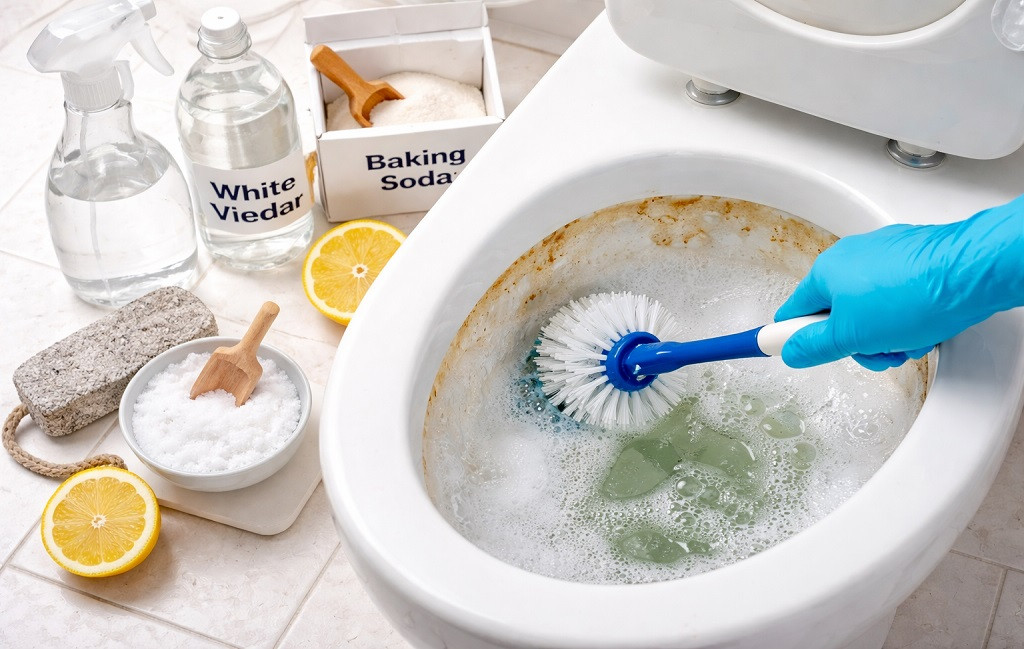
Hard water stains in a toilet are a common household problem. If you notice yellow, brown, or chalky white rings inside your toilet bowl, they are usually caused by mineral deposits left behind by hard water. These stains can make an otherwise clean bathroom look dirty and unpleasant.
Hard water contains minerals such as calcium and magnesium. When water sits in the toilet bowl for long periods, these minerals slowly build up on the porcelain surface. Over time, this buildup forms stubborn stains that regular flushing cannot remove.
Fortunately, there are several simple methods you can use to remove hard water stains and restore the toilet bowl to its original shine. In this guide, you will learn what causes these stains, how to remove them using natural and chemical solutions, and how to prevent them from coming back.
How Do You Remove Hard Water Stains From a Toilet?
Hard water stains in a toilet can be removed using common household ingredients such as vinegar, baking soda, citric acid, or by gently scrubbing the stains with a pumice stone. These methods help dissolve mineral deposits like calcium and magnesium, making it easier to clean stubborn stains from the toilet bowl.
What Causes Hard Water Stains in Toilets?
Hard water stains occur when water contains high concentrations of minerals, mainly calcium and magnesium. When this mineral-rich water sits in the toilet bowl, the water slowly evaporates but the minerals remain behind.
Over time, these minerals accumulate and form deposits on the surface of the toilet bowl. These deposits often appear as:
- Yellow or brown rings around the water line
- White chalky buildup
- Rust-colored stains in severe cases
Homes located in areas with hard water are especially prone to these stains. The longer mineral deposits remain in the toilet bowl, the more difficult they become to remove.
Why Hard Water Stains Are Difficult to Remove?
Hard water stains can be difficult to remove because they are formed by mineral deposits that bond tightly to the porcelain surface of the toilet bowl. Minerals such as calcium and magnesium accumulate over time and gradually create a hardened layer known as limescale.
Unlike ordinary dirt or soap residue, these mineral deposits do not dissolve easily with regular cleaning. As water repeatedly evaporates from the bowl, the minerals remain behind and continue to build up. This process makes the stains thicker and more stubborn over time.
Another reason these stains are difficult to remove is that they often develop in areas where water constantly sits, such as the waterline of the toilet bowl. Without proper cleaning solutions that break down mineral buildup, the stains can become increasingly resistant to normal scrubbing.
Using acidic cleaners such as vinegar, citric acid, or specialized mineral removers can help dissolve these deposits and make cleaning much easier.
How Often Should You Clean Hard Water Stains in Toilets?
Regular cleaning helps prevent mineral buildup from becoming a serious problem. Ideally, you should clean your toilet bowl at least once a week using a toilet brush and mild cleaner.
For homes with very hard water, it is recommended to perform a deeper cleaning every two to four weeks using vinegar or another mineral-removing solution. This helps dissolve early mineral deposits before they form stubborn rings.
Maintaining a regular cleaning schedule keeps your toilet looking fresh and prevents stains from becoming permanent.
Common Mistakes When Cleaning Hard Water Stains
Many people struggle to remove hard water stains because they unknowingly use ineffective cleaning methods. Avoiding these common mistakes can make the cleaning process much more successful.
One common mistake is using regular bathroom cleaners that are not designed to dissolve mineral deposits. These cleaners may remove surface dirt but often fail to break down calcium buildup.
Another mistake is scrubbing too aggressively with rough tools. While scrubbing can help loosen stains, using abrasive materials may scratch the porcelain surface of the toilet bowl.
Some people also make the mistake of not allowing cleaning solutions enough time to work. Products like vinegar or citric acid need time to dissolve mineral deposits before scrubbing.
Finally, many homeowners ignore early signs of mineral buildup. Waiting too long to clean the toilet allows hard water stains to become thicker and more difficult to remove.
By using the right cleaning methods and addressing stains early, you can remove hard water stains more easily and keep your toilet bowl looking clean.
What You’ll Need
Before starting the cleaning process, gather the necessary tools and materials.
Equipment / Tools
- Toilet brush
- Rubber cleaning gloves
- Pumice stone
- Cleaning sponge
- Spray bottle
Materials
- White vinegar
- Baking soda
- Borax or salt
- Citric acid powder
- Commercial toilet cleaner
These common cleaning supplies are usually enough to remove most hard water stains from a toilet bowl.
Instructions
Before applying any cleaning method, it is helpful to prepare the toilet bowl properly.
First, wear rubber gloves to protect your hands. If the water level in the bowl is high, you may want to turn off the water supply and flush once to reduce the water level. This allows cleaning solutions to work directly on the stained areas.
Once the bowl is prepared, choose one of the cleaning methods below.
How to Remove Hard Water Stains From Your Toilet
There are several effective methods for removing hard water stains. Many of them use natural household ingredients that are safe and affordable.
Vinegar and Baking Soda
One of the most popular natural cleaning solutions involves vinegar and baking soda. Vinegar is acidic, which helps dissolve mineral deposits, while baking soda provides gentle scrubbing action.
Start by pouring one cup of white vinegar into the toilet bowl. Make sure the vinegar covers the stained areas. Next, add about half a cup of baking soda. The mixture will begin to fizz as the two ingredients react.
Allow the mixture to sit in the toilet bowl for about 15 to 20 minutes. This gives the acidic solution time to break down mineral deposits. After waiting, scrub the stained areas with a toilet brush and flush the toilet.
This method works well for light to moderate hard water stains.
Quick How-To:
Pour 1 cup of white vinegar into the toilet bowl, then add ½ cup of baking soda. Let it fizz for 15–20 minutes. Scrub gently with a toilet brush and flush. The fizzing action helps break down hard water stains without scratching the porcelain surface.
Vinegar and Borax (or Salt)
For more stubborn stains, combining vinegar with borax or salt can provide stronger cleaning power.
Begin by pouring one cup of white vinegar into the toilet bowl. Then sprinkle about half a cup of borax or salt over the stained areas. Let the mixture sit for at least 30 minutes so it can penetrate the mineral deposits.
After soaking, scrub the toilet bowl with a brush to loosen the stains. Finally, flush the toilet to rinse away the cleaning solution.
Borax is particularly effective for breaking down tough mineral buildup.
Quick How-To:
Pour 1 cup of white vinegar into the toilet bowl and sprinkle ½ cup of borax or salt on the stains. Let it sit for 30 minutes, then scrub with a toilet brush. Flush to rinse. This method works well for stubborn mineral deposits.
Citric Acid
Citric acid is another powerful natural cleaner that works well against hard water stains. Because it is acidic, it can dissolve calcium deposits quickly.
Sprinkle a small amount of citric acid powder directly into the toilet bowl, especially on the stained areas. Let the powder sit for about 15 to 20 minutes.
After waiting, scrub the bowl using a toilet brush. The mineral deposits should begin to loosen and wash away when you flush.
Citric acid is especially useful for removing white mineral deposits caused by calcium buildup.
Quick How-To:
Sprinkle citric acid powder directly on the stained areas of the toilet bowl. Let it sit for 15–20 minutes. Scrub the stains with a toilet brush and flush. Citric acid dissolves calcium buildup effectively, leaving the toilet clean and bright.
Pumice Stone
A pumice stone can remove extremely stubborn hard water stains that other methods cannot eliminate.
Before using a pumice stone, always wet both the stone and the toilet surface. This helps prevent scratching the porcelain. Gently rub the pumice stone over the stained area using light pressure.
As you scrub, the abrasive surface of the stone slowly removes the mineral buildup. Continue rubbing until the stains fade. When finished, flush the toilet to rinse away debris.
Although pumice stones are effective, they should be used carefully to avoid damaging the toilet surface.
Quick How-To:
Wet both the pumice stone and the stained area of the toilet bowl. Gently rub the stone on the stain in small circular motions. Keep the stone wet to avoid scratching porcelain. Flush the toilet after the stain is removed.
The Chemical Solution to Hard Water Stains
If natural methods do not fully remove the stains, commercial toilet cleaners can provide stronger results. These cleaners contain chemicals specifically designed to dissolve calcium, lime, and rust deposits.
Products such as CLR Calcium Lime Rust Remover are commonly used to tackle severe mineral buildup. Another effective option is Lysol Power Toilet Bowl Cleaner, which helps break down tough stains while disinfecting the toilet.
When using chemical cleaners, always follow the instructions on the product label. Wear gloves and ensure good ventilation in the bathroom. After applying the cleaner, allow it to sit for the recommended time before scrubbing and flushing.
Chemical cleaners are often the fastest solution for extremely stubborn hard water stains.
Quick How-To:
Apply a commercial hard water cleaner such as CLR or Lysol Power Toilet Bowl Cleaner to the stains following the product instructions. Allow it to sit for the recommended time, scrub with a brush, and flush. Chemical cleaners work best on severe mineral buildup.
Tips for Preventing Hard Water Stains in a Toilet
Preventing stains is much easier than removing them. By following a few simple habits, you can reduce the chances of hard water stains forming in your toilet bowl.
First, clean the toilet regularly using a toilet brush and mild cleaner. Weekly cleaning helps remove mineral deposits before they accumulate.
Second, consider pouring a cup of vinegar into the toilet bowl once a month. Let it sit for about 30 minutes before flushing. This simple treatment helps dissolve early mineral buildup.
Third, avoid letting stains remain untreated for long periods. The longer mineral deposits stay on the porcelain surface, the harder they become to remove.
Finally, if your home has very hard water, installing a water softener can significantly reduce mineral content in the water supply.
By taking these preventive steps, you can keep your toilet bowl cleaner for longer.
Frequently Asked Questions
Does vinegar remove hard water stains from a toilet?
Yes, vinegar is an effective natural cleaner for removing hard water stains. Because vinegar is acidic, it helps dissolve mineral deposits such as calcium and magnesium that cause stains in the toilet bowl.
What dissolves calcium buildup in a toilet?
Citric acid, vinegar, and certain commercial cleaners are excellent at dissolving calcium buildup. These substances break down mineral deposits, making them easier to scrub away.
Can baking soda damage a toilet bowl?
No, baking soda is a mild abrasive that is safe to use on porcelain surfaces. It helps scrub away stains without scratching the toilet bowl.
How do you remove stubborn toilet stains without heavy scrubbing?
Using acidic solutions like citric acid or specialized mineral-removing cleaners can dissolve tough stains, reducing the need for intense scrubbing.
Final Words
Hard water stains in toilets are a common issue caused by mineral-rich water. While these stains may appear difficult to remove, several simple methods can effectively clean the toilet bowl.
Natural solutions such as vinegar, baking soda, citric acid, and borax can dissolve mineral deposits and restore the toilet’s shine. For more stubborn stains, pumice stones and commercial cleaners provide stronger cleaning power.
The best approach is to combine regular cleaning with preventive maintenance. By keeping the toilet bowl clean and addressing mineral buildup early, you can prevent hard water stains from becoming a persistent problem. With the right techniques and cleaning routine, maintaining a spotless toilet bowl becomes much easier.