
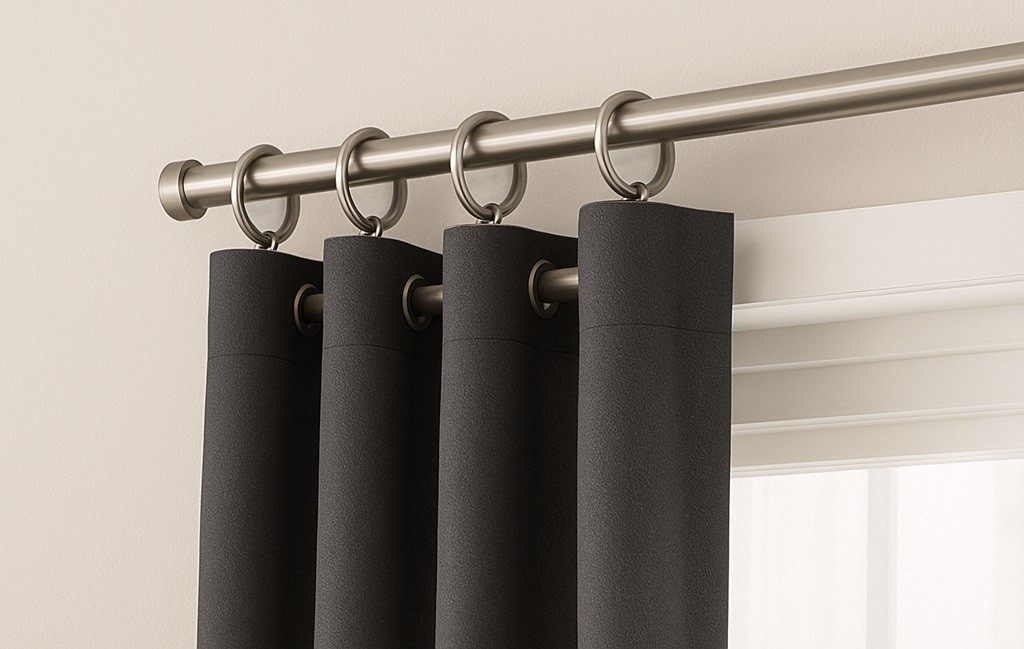
Choosing the right hardware is just as important as choosing your curtains. Blackout curtains are essential for blocking light, regulating temperature, and ensuring privacy, but they are significantly heavier than standard drapes due to their dense, multi-layered, thermal, or foam-backed linings.
A thin or weak curtain rod cannot support this weight and will quickly sag or bow in the middle. Choosing the correct rod diameter is the critical first step to prevent this unsightly sagging, ensuring your curtains operate smoothly, securely, and maintain their clean, tailored look.
What Diameter Curtain Rod Is Best for Blackout Curtains?
When dealing with the substantial weight of blackout drapes, you need to step up from the thin, decorative rods.
Recommended Diameter 📏
The ideal diameter for a curtain rod carrying heavy blackout curtains is:
- Standard Recommendation: 1 inch (2.5 cm) to 1.25 inches (3.2 cm). This range provides the necessary structural integrity for the majority of medium-to-heavy blackout panels over standard window spans.
- For Extra-Heavy or Layered Blackout Curtains: Consider a diameter of 5 inches (3.8 cm). This is best for extremely wide windows, drapes made of very heavy materials like velvet or wool, or when combining multiple thermal or interlining layers.
Why Diameter Matters
- Weight Support: Thicker rods offer a much higher weight capacity, directly countering the heaviness of blackout fabric.
- Reduces Sagging: A greater diameter increases the rod’s strength and resistance to bending under a concentrated load, especially over long spans.
- Provides Better Stability: The thicker diameter ensures a more secure fit within the brackets, minimizing wobble and stress during curtain operation.
- Enhances Durability: Thicker rods, particularly those made of high-quality metal, are less likely to be damaged over time by the friction and stress of repeated use.
Factors to Consider When Choosing Curtain Rod Diameter
Choosing a diameter isn’t just about the curtain; it’s about the entire window setup, from the fabric weight to the necessary hardware.
Curtain Weight
The heavier your panels, the thicker your rod needs to be.
- Single Blackout Panels: A sturdy 1-inch rod is usually sufficient.
- Double-Layered Curtains: If you are hanging a sheer layer in addition to the heavy blackout layer (often using a double rod setup), opt for the 25-inch size or higher to handle the combined load.
Curtain Rod Material
The strength of the material works with the diameter. Always prioritize material strength.
- Metal Rods (Steel, Iron): These offer the best strength-to-diameter ratio and should be your first choice. Avoid thin, hollow metals.
- Wood Rods: Can be a stylish option, but only choose thick, solid wood (1.5 inches+) for heavy drapes, as thinner wood can warp or break under continuous strain.
Rod Length
The span between supports is the single biggest factor influencing the need for thickness.
- Shorter Rods (< 60 inches): A sturdy 1-inch rod may suffice without a center support.
- Longer Rods (> 60–80 inches): These always require a thicker diameter (25 inches or more) and, more importantly, must include center support brackets.
Brackets & Support
Brackets are the unsung heroes of a sag-free rod.
- How Many Brackets: For rod lengths over 48 inches, plan to use at least three brackets (one on each end and one in the center). For very wide windows (90 inches or more), consider two evenly spaced center brackets.
- Placement Tips to Avoid Mid-Rod Sagging: Always place the brackets securely into a wall stud if possible. If not, use high-quality heavy-duty anchors designed for the load weight to ensure maximum support.
Best Types of Curtain Rods for Blackout Curtains
The style of the rod can also affect stability and the effectiveness of the light blockage.
Metal Rods
Metal rods made of steel or iron are the default ideal choice for heavy curtains. They are highly resistant to bending and provide a modern, durable foundation.
Double Curtain Rods
These are perfect for a layered approach:
- Ensure the inner rod (for the blackout curtain) has a minimum 1-inch diameter for support.
- The outer rod (for a sheer or decorative curtain) is often slightly larger (e.g., 1.25 inches) for aesthetics. Always confirm the combined weight capacity.
Wraparound Curtain Rods
Also known as French Return rods, these curve back and mount flush to the wall. They are excellent for blackout curtains because they allow the fabric to wrap around the window frame, significantly eliminating light leaks at the sides.
Traverse Rods
These rods use an internal track and pulley system to smoothly draw the curtain. They are the best choice for very heavy, lined, or custom drapes on extremely wide windows, as the support is distributed along the entire length.
Tips for Proper Installation
Even the best rod will fail without proper installation, which is crucial for heavy loads.
- Rod Placement Height: For the best visual effect and to make the room feel taller, mount the rod 4–6 inches above the window frame, or closer to the ceiling.
- Avoiding Drywall Damage: Never rely on standard plastic drywall plugs for heavy blackout curtains. Always use metal toggle bolts or heavy-duty wall anchors rated for the specific load capacity.
- How to Position Brackets for Maximum Strength: Extend your brackets 4 to 10 inches past the window trim on each side. This allows the curtain to be pushed completely off the glass when open.
- Avoid Cheap Tension Rods for Blackout Curtains: Tension rods are an absolute no. The weight will almost guarantee the rod will slip, fall, and potentially damage your wall or floor.
Recommended Curtain Rod Materials (Strength Ranking)
Rank | Material | Why It Works for Blackout Curtains |
#1 | Steel | Excellent tensile strength; highly resistant to bending and sagging. Best choice for heavy weight and long spans. |
#2 | Iron (Wrought) | Very heavy and durable. Provides a substantial, classic look and superior weight-bearing capacity. |
#3 | Aluminum (Thick-Gauge) | Lighter than steel, but still resistant to bending if it is a thick, solid or heavy-gauge rod. Avoid thin-walled aluminum. |
#4 | Wood (Solid) | Acceptable for medium weight blackout curtains, especially when thick (1.5″ or more). Can warp over time in fluctuating humidity/heat. |
#5 | Plastic | AVOID. Completely unsuitable for blackout curtains, as it offers little to no structural support for heavy loads. |
Buying Guide
When shopping for your blackout curtain rod, focus on quality and structural support first, and aesthetics second.
What to Look For
- Heavy-Duty Material: Prioritize steel or iron, especially for the core rod diameter of 1 inch or 1.25 inches.
- Correct Diameter: Double-check the product specifications to ensure the diameter meets the 1-inch minimum for your needs.
- Adjustable vs. Fixed Rods: Fixed-length rods (often cut to size) are inherently stronger than adjustable (telescoping) rods, as telescoping connections can create weak points. If adjustable, ensure the inner and outer sections overlap significantly.
- Number of Brackets: Verify the rod set includes a sufficient number of brackets for your window width (minimum three for spans over 48 inches).
- Mounting Hardware Quality: Look for kits that include heavy-duty metal screws and anchors, or plan to purchase your own separate high-quality anchors.
Common Mistakes to Avoid
- Choosing a Rod Too Thin (< 0.75″): This is the number one cause of rod failure and sagging with heavy drapes.
- Using Tension Rods for Blackout Curtains: These rely purely on friction and are not designed to hold a sustained, heavy, dynamic load.
- Not Considering Curtain Grommet Size: Ensure your chosen rod diameter (e.g., 1.25 inches) can easily fit through the grommets or rod pockets of your blackout curtain panels. Always measure both before purchasing.
Frequently Asked Questions (FAQ)
1. Can I use a 3/4-inch rod for blackout curtains?
A: It is strongly discouraged. A 3/4-inch rod (19 mm) is generally too thin to support the weight of most blackout curtains. It will likely bow or sag, particularly if your window is wider than 40 inches or if the curtains are heavy thermal drapes. Always aim for a minimum of 1 inch.
2. How do I know how heavy my blackout curtains are?
A: While you may not know the exact weight in pounds, you can estimate based on the material:
- Heavy: Velvet, thick thermal linings, or drapes with multiple layers (interlining). These require 25 inches or more.
- Medium: Standard polyester or cotton blackout drapes with a single foam backing. These require 1 inch.
- Light: Simple, thin room-darkening shades (not full blackout). These might tolerate a 3/4-inch rod, but it’s still safer to go thicker.
3. How far should my curtain rod stick out past the window frame?
A: It should extend 4 to 10 inches beyond the frame on each side. This extended length (called stacking space) allows the pulled-back curtain panels to rest against the wall, clearing the entire window glass. This maximizes the light entering the room when the curtains are open, and ensures a cleaner look.
4. What is the benefit of a traverse rod?
A: Traverse rods are metal tracks that use carriers and a cord system to move drapes. Their key benefit is superior support and smooth operation for very heavy or very wide curtains. They distribute the weight evenly across the entire track, virtually eliminating sagging and protecting the expensive fabric from being tugged by hand.
5. Can I use an adjustable/telescoping rod?
A: You can, but only if you select a high-quality, heavy-duty model with a diameter of 1 inch or larger. Adjustable rods are weaker than fixed rods because the point where the two sections overlap is the rod’s weakest point. For wide windows, a fixed rod or a thicker adjustable rod with a substantial overlap is safer.
Conclusion
When installing heavy blackout curtains, the simple answer to “what diameter curtain rod is best” is to prioritize strength and substance.
The ideal rod diameter is 1 inch to 1.25 inches in a high-strength material like steel or iron. This combination, paired with the necessary center support brackets for any wide window, will eliminate sagging, ensure smooth operation, and keep your room dark for years to come. Don’t compromise quality—a heavy-duty rod is the investment that protects the look and function of your expensive blackout drapes.