
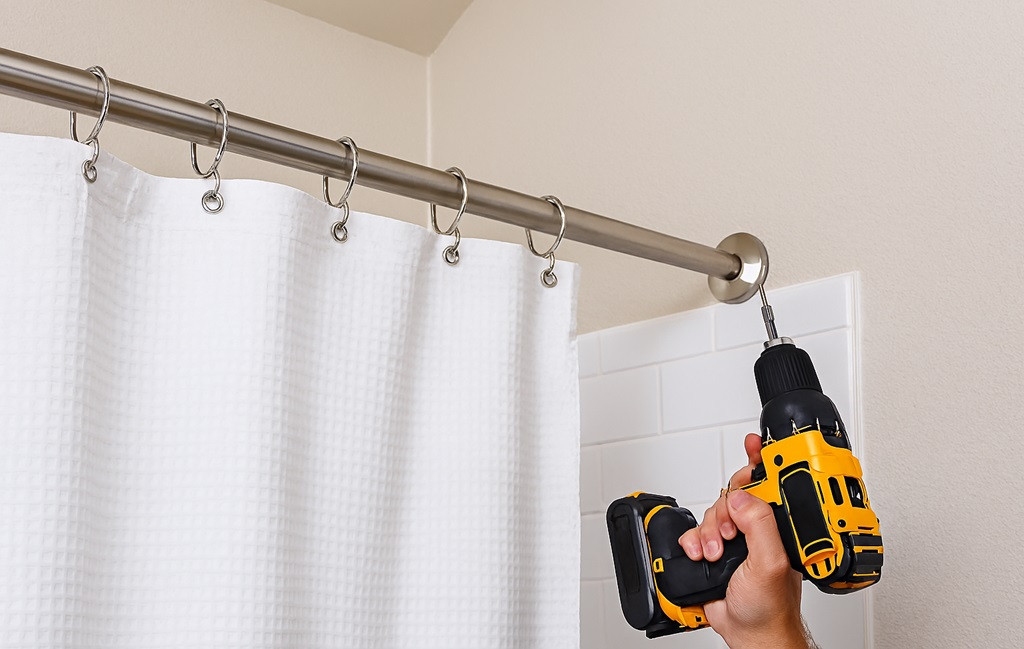
Whether you’re a new homeowner, a renter looking to avoid damage charges, or in the middle of a high-end bathroom renovation, the shower curtain rod is a small detail that carries significant weight. Beyond just holding up a piece of fabric, the right rod ensures water stays where it belongs and adds a layer of design to your space.
In 2025, the cost to install a shower curtain rod ranges from a DIY low of $15 to a professional high of $300. This guide provides a comprehensive cost breakdown, technical installation insights, and expert recommendations to help you navigate this project like a pro.
Average Cost to Install a Shower Curtain Rod
While the national average for a standard installation sits around $115, your specific price will depend heavily on the wall material (tile vs. drywall) and the rod style.
Installation Type | Materials Only | Total Professional Cost |
Basic Tension Rod | $15 – $45 | N/A (Always DIY) |
Permanent Straight Rod | $20 – $60 | $120 – $190 |
Curved/Double Rod | $30 – $110 | $160 – $300 |
Custom/Ceiling Mount | $80 – $200 | $250 – $450 |
DIY Shower Curtain Rod Installation Cost
Choosing the DIY route is the most popular way to tackle this task. If you are using a tension rod, your labor “cost” is essentially zero and the job takes five minutes. However, for permanent mounts, you must factor in the cost of tools if you don’t already own them.
Cost of Different Rod Types (2025 Market Rates)
- Tension Rods ($15 – $50): These use an internal spring or twist-lock mechanism to stay in place. Modern 2025 versions often feature non-slip silicone end caps to prevent wall scuffing.
- Straight Wall-Mounted Rods ($20 – $65): These require drilling brackets into the wall. They are the gold standard for durability and can hold heavier designer curtains.
- Curved Shower Curtain Rods ($35 – $115): These bow outward to provide roughly 6–8 inches of additional “elbow room.” Because they create more leverage on the wall, they almost always require permanent screws.
Essential Tools & Equipment
If you are moving from a tension rod to a permanent one, you may need to purchase or rent:
- Power Drill: $50 – $120 (Rental: $15/day)
- Diamond-Tipped Drill Bit: $12 – $25 (Required for porcelain tile)
- Stud Finder: $20 – $40
- Level: $10
Pro Tip: Never use a standard masonry bit on porcelain tile. It will overheat and crack the tile. Always use a diamond-grit bit and keep a spray bottle of water nearby to cool the bit during the process.
Professional Shower Curtain Rod Installation Cost
Why would someone pay $150 to install a $30 rod? Usually, it’s about the risk of tile damage. Replacing a single cracked porcelain tile can cost significantly more than the handyman’s visit.
- Handyman Hourly Rates: In 2025, expect to pay $65 to $150 per hour. Most pros have a “service call” minimum of one hour.
- Contractor Charges: If you are part of a larger bathroom remodel, a contractor might bundle this in for $50–$75, as they already have the tools on-site.
- Urban vs. Rural Pricing: In cities like New York, Chicago, or London, minimum call-out fees often start at $175 due to travel and parking overhead.
Factors That Affect Installation Cost
Several technical variables can turn a 20-minute job into a two-hour ordeal, driving up professional costs.
Wall Material (The Biggest Variable)
- Drywall: Simple. You can use standard plastic anchors or toggle bolts.
- Ceramic Tile: Moderate. Requires a masonry bit and a steady hand.
- Porcelain Tile: Difficult. This is much harder than ceramic and requires high-end diamond bits.
- Fiberglass/Acrylic Inserts: These often have a hollow space behind them, requiring specialized “wing” anchors to prevent the rod from pulling through the thin plastic.
Rod Weight and Tension
A double-curved rod (designed to hold a liner and a heavy decorative curtain separately) exerts significant force on the brackets. Professional installers often charge more for these as they must locate studs or use heavy-duty toggle bolts to ensure the rod doesn’t sag over time.
Accessibility
Installing a rod over a deep soaking tub or in a tight walk-in stall increases the difficulty for the installer, as they have limited room to maneuver a drill or level.
DIY vs. Professional Installation: Cost-Benefit Analysis
Feature | DIY Installation | Professional Installation |
Total Cost | $15 – $100 | $150 – $300 |
Time Investment | 1–2 hours (incl. shopping) | 30 minutes |
Tools Needed | Drill, bits, level, tape | Included in labor |
Risk Factor | Potential tile cracking | Insured against damage |
Longevity | Depends on anchor quality | Professional-grade stability |
Best Shower Curtain Rods for Easy Installation
If you’re doing this yourself, choosing the right hardware can save you hours of frustration. Here are the top-rated rods for 2025:
- Best Overall Tension Rod: Briofox Never-Rust Stainless Steel
This rod is a favorite for renters. It features an industrial-strength spring and a large “non-slip” pad that holds up to 30 lbs without drilling.
- Price: ~$32
- Why it’s easy: No tools; installs in under 2 minutes.
- Best Curved Rod for Tile: Moen Adjustable Tension Curved Rod
Traditionally, curved rods required drilling. Moen’s tension-curved version gives you the extra space of a curved rod with the ease of a tension mount.
- Price: ~$45
- Why it’s easy: It uses a “dual-mount” system, allowing you to try tension first before committing to screws.
- Best for Heavy Curtains: Zenna Home NeverRust Double Rod
If you want the “hotel look” with a separate liner and decorative curtain, this aluminum rod is rust-proof and exceptionally sturdy.
- Price: ~$75
- Why it’s easy: Includes a template for drilling, taking the guesswork out of leveling.
How to Save Money on Installation
- Avoid the “Minimum Fee”: If you hire a handyman, have a “punch list” of 3-4 items (changing light bulbs, tightening a door handle, etc.) to make the most of the hourly rate.
- Mount Above the Tile: If your tile doesn’t go to the ceiling, mount the rod in the drywall section above the tile. This avoids the need for specialized bits and the risk of tile breakage.
- Buy a “Kit”: Purchase rods that come with the anchors and screws included. Buying high-quality anchors separately can add $10 to your cost.
- Use Tension Rods in Rentals: Even the most expensive tension rod is cheaper than losing a security deposit over holes drilled in a landlord’s tile.
Step-by-Step Installation Checklist
If you decide to DIY, follow this professional workflow:
- Measure the Height: Standard height is 75–77 inches from the floor. This allows a standard 72-inch curtain to hang with a 2-inch overlap inside the tub.
- Mark the Studs: Use a stud finder. If you hit a stud, you don’t need anchors—just stainless steel screws.
- Tape Before Drilling: Place a piece of painter’s tape over your mark on the tile. This prevents the drill bit from “skating” and scratching the surface.
- Level Twice: Use a 2-foot level. A rod that is off by even 1/4 inch will cause the curtain to slide to one side constantly.
- Choose the Right Anchor: * Drywall: Toggle bolts.
- Tile: Plastic wall plugs.
- Fiberglass: Butterfly/Wing anchors.
FAQs
How much does a handyman charge to install a shower rod?
Most handymen charge a minimum of $75 to $150. Since the task only takes about 20 minutes, it is best to bundle it with other household repairs.
Can I install a shower curtain rod without drilling?
Yes. Modern tension rods are highly effective. For a more permanent “no-drill” solution, some brands now offer high-strength adhesive mounting kits that can hold up to 20 lbs.
Is a curved shower rod more expensive to install?
The materials are roughly 20% more expensive than straight rods. For professional installation, the labor cost is the same unless the rod requires specialized ceiling supports.
How long does a professional installation take?
A professional can typically install a permanent rod in 15 to 30 minutes, including the time to measure and clean up.
Final Thoughts
While the cost to install a shower curtain rod can reach $300 for a high-end professional job, most homeowners can achieve great results for under $50 by selecting a high-quality tension or “easy-mount” rod.
If you have expensive porcelain tile, the peace of mind that comes with a professional installation is often worth the $150 investment. However, for 90% of bathrooms, a sturdy stainless steel tension rod is the fastest and most cost-effective solution for 2025.